
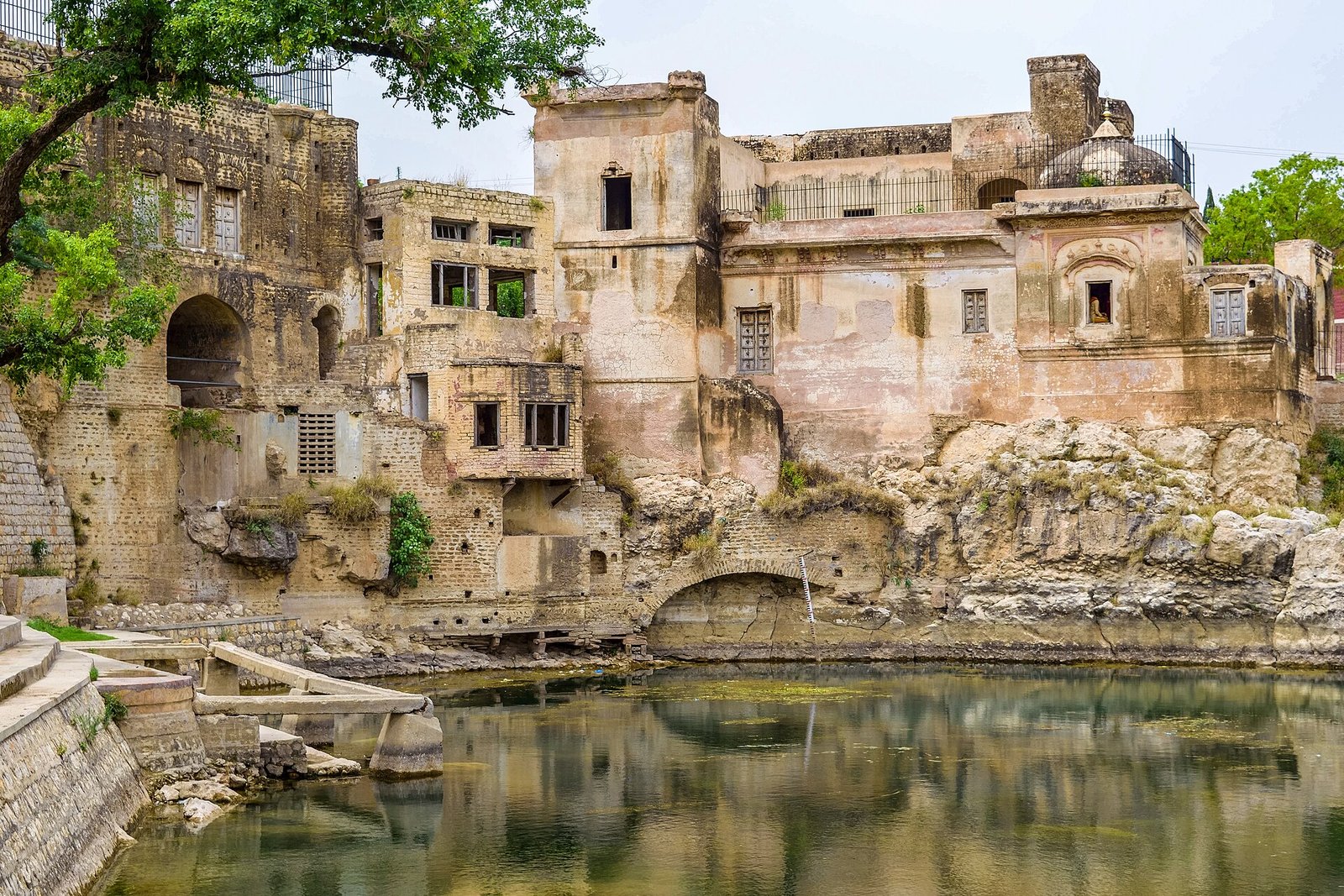
Katas Raj Temples at a Glance
Katas Raj Temples are a group of Hindu shrines, a Sikh-era haveli and the traces of a Buddhist stupa gathered around a sacred pond near Choa Saidan Shah in Chakwal District. They are an easy day out from Islamabad and one of the two most visited Hindu pilgrimage sites in Pakistan.
LocationChoa Saidan Shah, Chakwal District, Salt Range, Punjab
AltitudeAbout 610 m (2,000 ft)
Best time to visitOctober to March; February/March for Maha Shivratri
Getting thereAbout 2 hours by car from Islamabad via the M2 Motorway (Kallar Kahar exit); roughly 3.5 hours from Lahore
Top sightsSacred pond, Satghara temples, Rama and Hanuman temples, Hari Singh Nalwa haveli, stupa remains
Known forShiva legend, Mahabharata links, shared Hindu, Sikh and Buddhist heritage
