thegoldenadventure.com

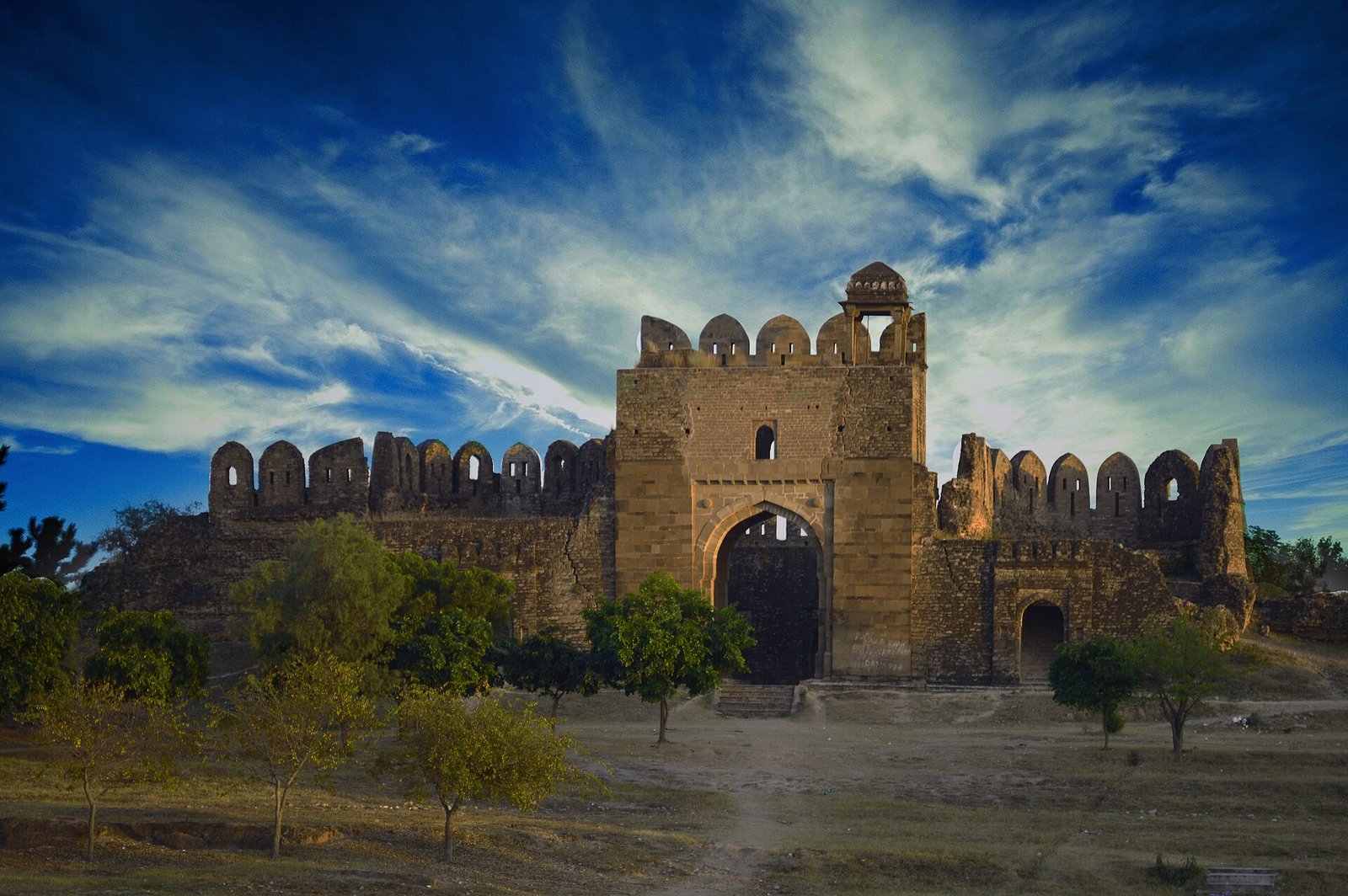
Rohtas Fort: Sohail Gate, Jhelum district
Destination guide

Rohtas Fort: The Complete Travel Guide

Rohtas Fort is a colossal 16th-century garrison of gates, bastions and stepwells on a ridge above the Kahan River, and one of the least crowded UNESCO sites in South Asia.

Updated October 2026By The Golden Adventure team
Photo: Hassantahir6009 / Wikimedia Commons, CC BY-SA 4.0 (source)

Rohtas Fort at a Glance

Rohtas Fort (Qila Rohtas) was begun by the Afghan ruler Sher Shah Suri in 1541 and was inscribed as a UNESCO World Heritage Site in 1997. Its walls run for more than 4 km around a 70-hectare hilltop, with 68 bastions and 12 monumental gateways.

LocationNear Dina, Jhelum district, Punjab; about 16 km north-west of Jhelum city
BuiltFrom 1541, by Sher Shah Suri; construction supervised by Todar Mal
Best time to visitOctober to March
Getting thereAbout 2 hours by road from Islamabad, 3–3.5 hours from Lahore
Top sightsSohail Gate, Kabuli Gate, royal stepwell, Shahi Mosque, Haveli Man Singh
Known forMilitary architecture, 4 km of walls, a living village inside the walls

Where Is Rohtas Fort?

The fort stands on a hill in the Tilla Jogian range in northern Punjab, overlooking a gorge where the Kahan River meets a seasonal stream. The nearest town is Dina, roughly 10 km away, which has the closest railway station and bus stop. Jhelum city is about 16–18 km to the south-east.

It sits close to the historic Grand Trunk Road between Peshawar and Lahore, which is exactly why it was built here. Today the motorway and GT Road make it an easy stop between Islamabad and Lahore.

History of the Fort

Sher Shah Suri began the fortress in 1541, soon after defeating the Mughal emperor Humayun. It had two jobs: to stop Humayun returning from exile in Persia, and to subdue the Gakhar tribes of the Potohar plateau, who were loyal to the Mughals. Construction was overseen by Todar Mal, later a famous finance minister at Akbar’s court.

Sher Shah died in 1545, before the work was finished, and the Mughals returned to power soon after. Because it was never seriously besieged, the garrison survived remarkably intact. UNESCO describes it as an exceptional example of early Muslim military architecture in Central and South Asia.

Conservation today

Parts of the wall have collapsed, and encroachment has disrupted the fort’s original drainage, so rainwater is a real threat. The Punjab Directorate General of Archaeology and Museums manages the site and has been running restoration work. In July 2026 UNESCO carried out a technical visit to review that work, as reported by Dawn.

MUST-SEE EXPERIENCES

Top 9 Things to Do in Rohtas Fort

The site is huge, so these are the highlights we would prioritise on a first visit.

  1. 01
    History

    Sohail Gate

    The most photographed gate, flanked by two massive bastions with a towering arch. Its upper storey houses a small Sher Shah Suri museum.

  2. 02
    History

    Kabuli Gate and the royal stepwell

    Kabuli Gate looks out over the river and an old lemon grove. Just inside is a deep baoli (stepwell) that was reserved for the royal household; a visitor information centre is also housed in the gate.

  3. 03
    Viewpoint

    Haveli Man Singh

    The only palace in the fort, built on its highest point, with sweeping views across the walls and countryside. It has been closed for restoration at times, so ask on arrival whether you can go up.

  4. 04
    History

    Shahi Mosque

    A small mosque from Sher Shah’s time with three bays and flat roofs. It is still a place of prayer, so dress modestly.

  5. 05
    History

    The walls and bastions

    Walk a section of the ramparts for a sense of scale: 68 bastions and more than 4 km of walls, though some sections have collapsed, so stay on obvious paths.

  6. 06
    History

    Sar Gate and its stepwell

    There are three baolis in total. The one by Sar Gate was probably used by the garrison, and its stone steps drop steeply to the water level.

  7. 07
    Culture

    The village inside the walls

    Around 3,000 people live within the fort, in a town that has been inhabited since it was built. Walking its lanes is a reminder that this is a lived-in place, not just a ruin.

  8. 08
    Viewpoint

    Rani Mahal

    One of the few residential buildings in a mostly military complex, listed alongside Haveli Man Singh among the fort’s notable structures. Ask your guide whether it is accessible, as conservation work moves around the site.

  9. 09
    Nature

    The Kahan River gorge

    From the northern walls you look down into the gorge the fort was designed to command. Late-afternoon light on the stone is lovely in winter.

Best Time to Visit Rohtas Fort

Visit between October and March, when the Punjab plains are mild and dry. There is very little shade across the site, so the summer months of May and June are tiring, and the July–September monsoon can make paths muddy and slippery.

Visitors are rarely numerous, especially on weekdays. The site was reported open daily from 8 am to 5 pm in late 2025; check timings before you set out.

How to Get to Rohtas Fort

Most travellers arrive by private car, leaving the main road near Dina and following smaller village roads for the last stretch. Public transport reaches Dina, from where a rickshaw is the usual onward option.

FromDistanceTypical drive
IslamabadAbout 110 kmAround 2 hours
LahoreAbout 200 km3–3.5 hours
Jhelum cityAbout 16–18 kmAround 30 minutes
DinaAbout 10 kmAround 20 minutes by rickshaw

Drive times are estimates and vary with traffic on the GT Road.

Getting Around the Site

The walls enclose about 70 hectares, so you cannot see everything on foot in an hour. Visitors in late 2025 reported golf carts with drivers for hire, and local guides who approach you after you buy a ticket. A one- to two-hour visit covers the inner citadel area and the main gates; allow half a day if you want to walk the walls.

The ground is rough and uneven, with steep steps at the gates and stepwells, so wear proper shoes.

Where to Stay

There is no tourist accommodation inside the fort. Most visitors see it as a day trip from Islamabad or as a stop between Islamabad and Lahore. Jhelum has local hotels if you want to overnight nearby and combine the fort with the Salt Range.

Suggested Itineraries

Day trip from Islamabad

Leave early, spend two to three hours at the fort, and return in the afternoon. You can add the Khewra Salt Mine for a long but rewarding day.

Islamabad to Lahore in one day

Break the drive with a late-morning visit, then continue south to reach Lahore by evening.

Salt Range loop (2 days)

Combine the fort with Khewra and the Katas Raj Temples, overnighting in Jhelum or near Kallar Kahar.

What to Pack

  • Sturdy walking shoes for uneven stone and steep steps
  • Sun hat, sunglasses and sunscreen
  • Plenty of water and some food; reliable shops inside are scarce
  • Small rupee notes for tickets, a guide and a cart
  • A scarf for women to cover hair when visiting the mosque

Combine with Nearby Destinations

The fort sits at the heart of a rich heritage belt. To the south-west, the Salt Range holds the Khewra Salt Mine and the Hindu temples of Katas Raj. To the north, the Buddhist ruins of Taxila are an easy add-on from Islamabad. For a wider list, see UNESCO sites in Pakistan.

Culture & Etiquette

Remember that people live inside the walls. Ask before photographing residents, especially women, and keep voices down near homes and the mosque. Modest clothing covering shoulders and knees is the norm for everyone in rural Punjab.

Practical Travel Tips

Safety: Jhelum district is not on the UK FCDO’s list of areas to avoid; the US State Department rates Pakistan overall at Level 3, ‘Reconsider travel’. Check the latest FCDO travel advice and read Is Pakistan safe?

Tickets: In December 2025 entry was reported at PKR 500 for foreigners and PKR 20 for Pakistanis. Fees change, so treat this as a guide.

Money: Bring cash; there are no card facilities on site. See our guide to money in Pakistan.

ROHTAS FORT TRAVEL

Rohtas Fort Highlights at a Glance

Built to block an emperor’s return, this fortress has outlived both the Suri and Mughal dynasties. Its gates, bastions and stepwells remain almost untouched by later rebuilding.

It is an easy and rewarding stop on the Islamabad–Lahore route, and pairs naturally with the Salt Range and Taxila.

For the official description, see the UNESCO World Heritage listing.

Plan your Rohtas Fort trip

Rohtas Fort FAQs

Who built Rohtas Fort?

Sher Shah Suri, founder of the Suri dynasty, began it in 1541 after defeating Humayun. Todar Mal supervised the construction.

How long does it take to visit?

One to two hours covers the main gates, stepwell and mosque. Allow half a day if you want to walk the walls.

How far is Rohtas Fort from Islamabad?

About 110 km, usually around 2 hours by car. From Lahore it is about 200 km, or 3 to 3.5 hours.

What is the entry fee?

In late 2025 it was reported as PKR 500 for foreign visitors. Fees can change, so check on arrival.

Is it safe to visit?

Jhelum district is not on the UK FCDO’s list of areas to avoid, but Pakistan as a whole is Level 3 ‘Reconsider travel’ for US citizens. Check current advice before you go.

Why is it a UNESCO World Heritage Site?

UNESCO listed it in 1997 as an exceptional, largely intact example of early Muslim military architecture in Central and South Asia.

Can I combine it with the Khewra Salt Mine?

Yes, the two make a long but popular day from Islamabad, or a relaxed two-day Salt Range trip with Katas Raj.

TGA AI AssistantOnline · usually replies in seconds
AI can make mistakes. Please don't share personal, passport or card details.