thegoldenadventure.com

Katas Raj Temples near Chakwal, Punjab
Destination guide

Katas Raj Temples: The Complete Travel Guide

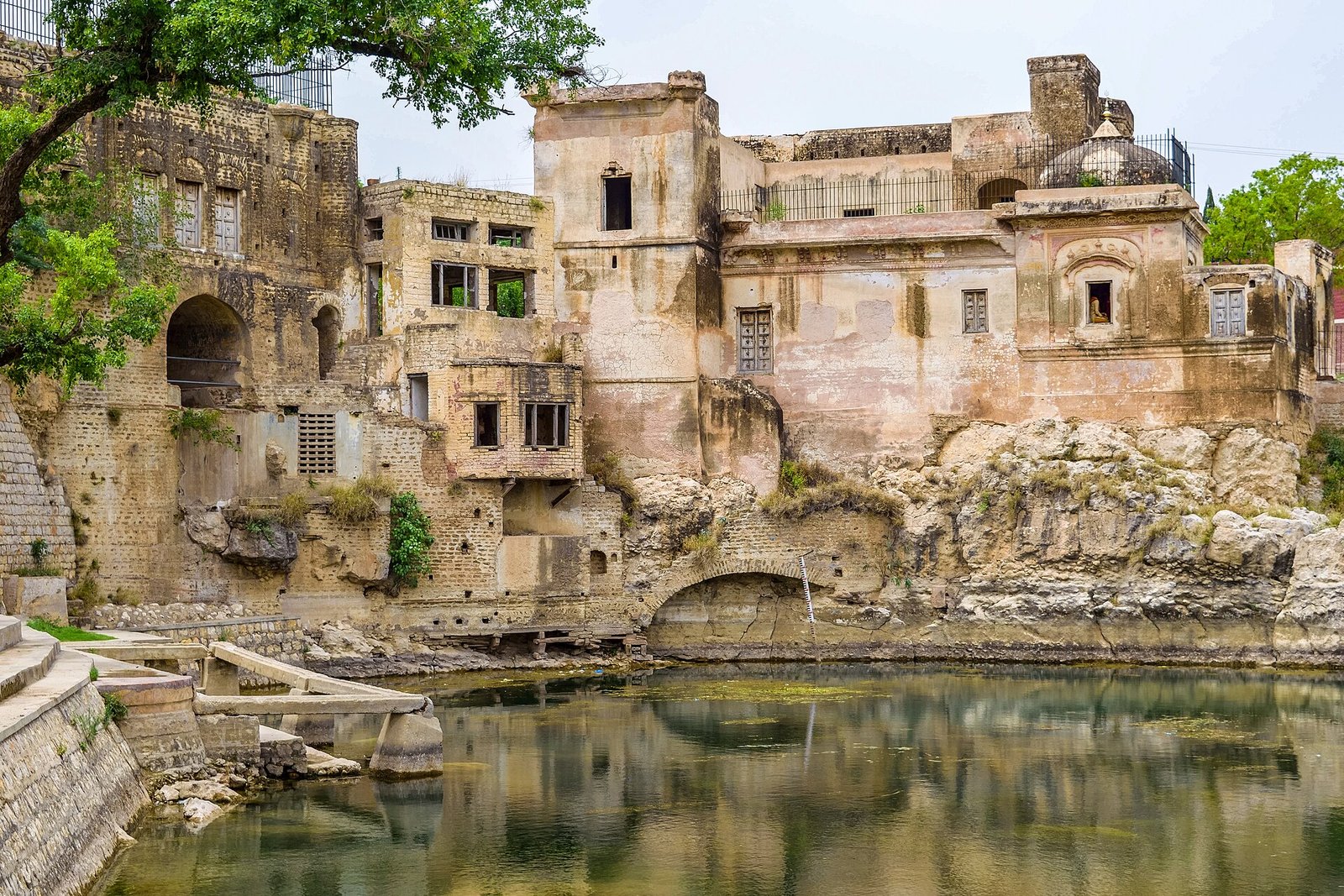
Katas Raj Temples wrap around a spring-fed pond in Punjab’s Salt Range, where Hindu legend says Shiva’s tears fell. Here is how to see them well.

Updated October 2026By The Golden Adventure team
Photo: Dowdoo14 / Wikimedia Commons, CC BY-SA 4.0 (source)

Katas Raj Temples at a Glance

Katas Raj Temples are a group of Hindu shrines, a Sikh-era haveli and the traces of a Buddhist stupa gathered around a sacred pond near Choa Saidan Shah in Chakwal District. They are an easy day out from Islamabad and one of the two most visited Hindu pilgrimage sites in Pakistan.

LocationChoa Saidan Shah, Chakwal District, Salt Range, Punjab
AltitudeAbout 610 m (2,000 ft)
Best time to visitOctober to March; February/March for Maha Shivratri
Getting thereAbout 2 hours by car from Islamabad via the M2 Motorway (Kallar Kahar exit); roughly 3.5 hours from Lahore
Top sightsSacred pond, Satghara temples, Rama and Hanuman temples, Hari Singh Nalwa haveli, stupa remains
Known forShiva legend, Mahabharata links, shared Hindu, Sikh and Buddhist heritage

Where Are the Katas Raj Temples?

The Katas Raj Temples sit in the Salt Range on the Potohar Plateau, in Choa Saidan Shah tehsil of Chakwal District, northern Punjab. The complex is at about 610 m and lies just off the M2 Motorway between Islamabad and Lahore, close to the lake town of Kallar Kahar (roughly 26 km away).

The setting is unexpectedly dramatic: dry, folded hills, scrub and limestone, then a sudden pool of bright green water ringed by pale stone towers. It is a short detour from the motorway, so most travellers combine it with the Khewra Salt Mine or Kallar Kahar on the same day.

History & Legends of the Katas Raj Temples

The name is usually traced to the Sanskrit kataksha, “tearful eyes”. In the Puranic story, Shiva wept so bitterly after the death of his wife Sati that his tears formed the pond. Another tradition ties the site to the Mahabharata: the exiled Pandava brothers are said to have stayed here, and Yudhishthira answered the riddles of a Yaksha at the water’s edge to bring his brothers back to life.

The real history is just as layered. The Chinese monk Faxian described a temple here in the 4th century CE, and Xuanzang wrote in the 7th century of a tall Buddhist stupa surrounded by springs. Most of the standing Hindu temples were built under the Shahi dynasties between the 7th and 10th centuries. Guru Nanak is believed to have visited, and Maharaja Ranjit Singh came on pilgrimage in 1806, 1818 and 1824.

After 1947 the Hindu community left and the site declined. Restoration began in 2006, new shikharas were placed on the temples in 2017, and in 2018 Pakistan’s Supreme Court ordered nearby cement factories to stop drawing groundwater that had been draining the pond (background in this Dawn report). Today the complex is managed as a protected heritage and pilgrimage site and still receive Hindu pilgrims, including groups from India.

MUST-SEE EXPERIENCES

Top 9 Things to Do in Katas Raj Temples

Allow two to three hours to walk the whole complex at a relaxed pace.

  1. 01
    Culture

    The Sacred Pond

    The heart of the site is the spring-fed pool, called Chashm-e-Alam in Urdu and Persian and up to about 20 ft deep. On a still morning its green water reflects the temple towers perfectly.

  2. 02
    History

    Satghara: the Seven Temples

    Southwest of the pond stands the Satghara group of seven temples, five still standing. The oldest is dated to the late 6th century CE and the main temple to the 10th century under the Hindu Shahi rulers.

  3. 03
    History

    Hari Singh Nalwa’s Haveli

    On a hillock above the complex is the small fortified residence linked to the Sikh general Hari Singh Nalwa, with four corner bastions. Climb up for the best overview of the whole site.

  4. 04
    Culture

    Rama Temple

    East of the haveli, the double-storey Rama temple has eight rooms on its ground floor and some of the finest surviving carved detail at the site.

  5. 05
    Culture

    Hanuman Temple

    At the western end of a high enclosure sits the Hanuman temple, a quieter corner that most groups rush past.

  6. 06
    Culture

    Shiva Temple

    Built on a square platform near the water, this is the shrine most closely tied to the pond’s legend and the focus of Maha Shivratri worship.

  7. 07
    History

    Buddhist Stupa Remains

    Little survives of the stupa Xuanzang described, but the remains are a reminder that this valley was sacred to Buddhists centuries before the current temples rose.

  8. 08
    Viewpoint

    Salt Range Views

    The low ridges around the complex give wide views over the eroded Salt Range. Late afternoon light turns the stone warm gold.

  9. 09
    Food

    Kallar Kahar Lunch Stop

    Kallar Kahar, about 26 km away on the motorway side, has roadside restaurants and a lake, making it the natural place to break the day.

Best Time to Visit the Katas Raj Temples

October to March is the comfortable window. Days are mild and the light is clear, ideal for walking between the temples, which offer little shade. Summers in Punjab are fierce, and the US State Department lists Punjab among the regions affected by extreme heatwaves, so from May to August plan for an early start and finish by late morning.

The big religious occasion is Maha Shivratri, which falls in February or March. In February 2025 a group of 109 Indian Hindu pilgrims came for the festival, arranged by Pakistan’s Evacuee Trust Property Board (Deccan Herald). Festival days bring tight security and crowds; quieter weekdays are better for photography.

How to Get to the Katas Raj Temples

There is no practical public transport straight to the site, so a private car with driver is the easy option. From Islamabad the drive is roughly 143 km and about two hours down the M2 Motorway, leaving at the Kallar Kahar interchange and continuing through Choa Saidan Shah. From Lahore it is around three and a half hours.

FromRouteApprox. time
Islamabad / RawalpindiM2 south to Kallar Kahar, then local road via Choa Saidan ShahAbout 2 hours
LahoreM2 north to Kallar Kahar, then local roadAbout 3.5 hours
Kallar KaharLocal road (about 26 km)30–45 minutes
Khewra Salt MineSalt Range roadsUnder 1 hour (combine on the same day)

Drive times are estimates for good traffic; motorway works and fog in December and January can add time.

Getting Around the Site

The complex is compact and entirely on foot, with stone steps and uneven paths between the pond, the Satghara group and the haveli on the hill. Wear shoes with grip and carry water. Signage is limited, so a guide who knows the legends and the restoration story adds a lot to the visit.

Where to Stay Near Katas Raj

Most travellers treat Katas Raj as a day trip and sleep in Islamabad or Lahore, which have the widest choice of good hotels. If you want to break a Lahore–Islamabad drive, simpler roadside accommodation exists around Kallar Kahar and Chakwal; standards vary widely, so ask us for current options before you rely on one.

Suggested Itineraries

Day trip from Islamabad

Leave around 8am, spend the late morning at the temples, lunch at Kallar Kahar, then continue to the Khewra Salt Mine in the afternoon and return to Islamabad by evening.

Two days on the Salt Range and Grand Trunk Road

Day one: Islamabad to the Katas Raj Temples and Khewra, overnight nearby or return to the capital. Day two: Rohtas Fort, the Sher Shah Suri fortress on the old Grand Trunk Road, then on to Lahore.

Hindu heritage circuit

Pair Katas Raj with other temple sites in Punjab and Lahore’s old city on our Punjab Hindu Temples Tour.

What to Pack

  • Comfortable walking shoes with good grip for steps and slopes
  • Sun hat, sunglasses and sunscreen; there is little shade
  • A light scarf or shawl for women and long trousers for men, for temple etiquette
  • A refillable water bottle and snacks
  • Warm layer from December to February, when mornings are cold
  • Copies of your passport and visa for police checkpoints

Combine Katas Raj with Nearby Destinations

The Salt Range is full of short detours. The Khewra Salt Mine is the obvious partner, and Rohtas Fort fits neatly on the way to Lahore. The Shahi-era temples at Malot and Nandana belong to the same building tradition, while Tilla Jogian, about 100 km away by road, is a hilltop monastery for travellers with extra time.

Heading north instead? Taxila and its Gandharan ruins are a natural next stop from Islamabad.

Culture & Etiquette

This is a living place of worship, not just a ruin. Dress modestly, remove shoes where asked before entering shrines, and do not touch idols or offerings. Ask before photographing worshippers, especially during Maha Shivratri.

Katas Raj is cared for by Pakistan’s Evacuee Trust Property Board and local staff, and many Pakistani visitors come as day-trippers. A polite greeting and a little patience at the gate go a long way.

Practical Travel Tips for the Katas Raj Temples

Safety and advisories: Chakwal District is in northern Punjab, which is not singled out in the current US advisory or in the UK FCDO’s advise-against areas (FCDO’s Punjab warning covers Dera Ghazi Khan). The US still rates Pakistan as a whole at Level 3, “Reconsider travel”, so read the US State Department advisory and UK FCDO advice before you book. Expect police checkpoints and carry your passport.

Visas: you need a Pakistan visa; see our Pakistan visa guide. Every TGA tour includes a free Letter of Invitation.

Entry: an entry fee may apply at the gate; amounts change, so confirm with us before you travel.

Money and signal: carry cash in rupees; card machines are rare. Mobile data works on the motorway and in nearby towns but can be patchy in the valley.

Local tip: arrive before 10am. The pond is calmest then, the light is soft, and you will have the Satghara temples almost to yourself.

KATAS RAJ TEMPLES TRAVEL

Katas Raj Temples Highlights at a Glance

Katas Raj combines Hindu legend, Shahi-era architecture, Sikh history and a Buddhist past in one compact site above a jade-green pond.

Being so close to the M2, they are the easiest major heritage stop between Islamabad and Lahore, and pair perfectly with the Khewra Salt Mine.

For the full background, including the Mahabharata legends and the 2018 water ruling, see the Katas Raj Temples article on Wikipedia.

Plan your Katas Raj Temples trip

Katas Raj Temples Tours with The Golden Adventure

Our Katas Raj Temples Pilgrimage is built for Hindu travellers from abroad who want time for prayer at the pond, while the Punjab Hindu Temples Tour links Katas Raj with other temple sites across the province. Both can be tailored around Maha Shivratri dates.

Plan your Katas Raj Temples trip

Tell us your dates and interests and our team in Gilgit will design a private trip and send your free Letter of Invitation.

Katas Raj Temples FAQs

Where are the Katas Raj Temples?

They are near Choa Saidan Shah in Chakwal District, Punjab, in the Salt Range just off the M2 Motorway, about two hours’ drive from Islamabad.

Can foreigners visit Katas Raj?

Yes. Foreign visitors with a valid Pakistan visa can visit; carry your passport for checkpoints and dress modestly as it is an active place of worship.

Is it safe to visit Katas Raj?

Northern Punjab is not named in the US or UK advise-against areas, but the US rates Pakistan overall at Level 3 (Reconsider travel). Check both advisories before you go and travel with a reputable local operator.

What is the legend of the Katas Raj pond?

Hindu tradition says the pond formed from Shiva’s tears after the death of his wife Sati. It is also linked to the Pandavas of the Mahabharata.

How long do you need at Katas Raj?

Two to three hours covers the pond, the Satghara temples and the haveli. Most people combine it with Kallar Kahar or the Khewra Salt Mine in one day.

When is Maha Shivratri at Katas Raj?

Maha Shivratri falls in February or March depending on the Hindu calendar. Groups of pilgrims, including some from India, attend; expect extra security and crowds.

Is there an entry fee?

An entry fee may be charged at the gate and amounts change, so confirm the current fee with us when planning.

TGA AI AssistantOnline · usually replies in seconds
AI can make mistakes. Please don't share personal, passport or card details.