thegoldenadventure.com

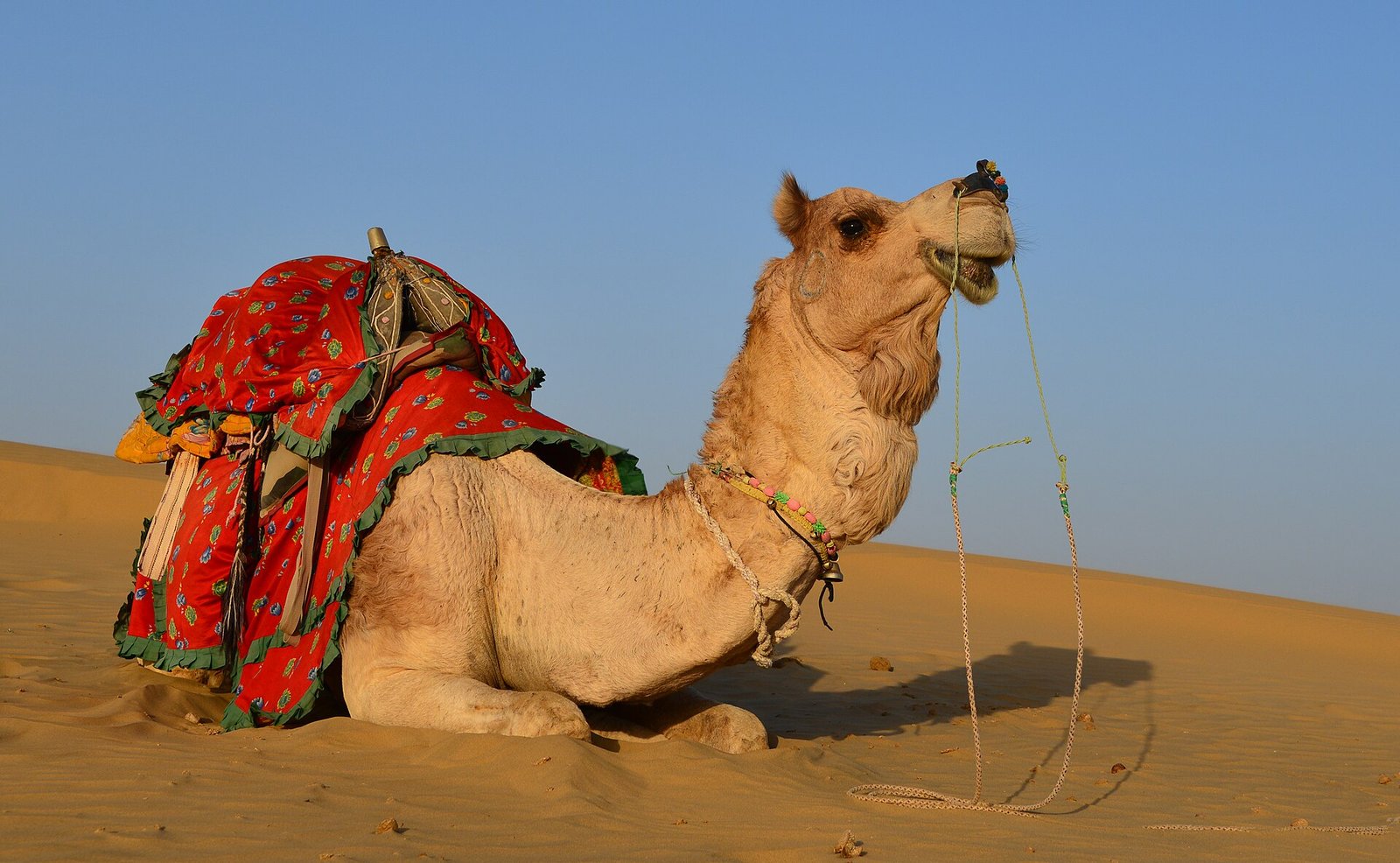
A dromedary camel in the Thar Desert, Tharparkar
Destination guide

Thar Desert: The Complete Travel Guide

The Thar Desert of Sindh is a land of sand dunes, peacocks, painted villages and centuries-old Jain temples, and after the monsoon it turns surprisingly green.

Updated October 2026By The Golden Adventure team
Photo: Clément Bardot / Wikimedia Commons, CC BY-SA 4.0 (source)

Thar Desert at a Glance

The Thar Desert stretches across the India–Pakistan border; its Sindh side centres on Tharparkar District, with Mithi as its capital. It is home to Pakistan’s largest Hindu community, granite hills at Nagarparkar, medieval Jain temples and some of the country’s warmest hospitality.

LocationTharparkar District, south-east Sindh, bordering India
AltitudeLow dunes and plains; Karoonjhar hills about 305 m
Best time to visitNovember to February; August–September for post-monsoon green
Getting thereAbout 300 km from Karachi via Thatta and Badin; 6–8 hours by road
Top sightsMithi, Gaddi Bhit dune, Islamkot, Nagarparkar Jain temples, Karoonjhar Mountains
Known forPeacocks, Hindu and Jain heritage, desert villages, crafts

Where Is the Thar Desert?

The desert covers a broad sweep of north-west India and south-east Pakistan, with about two-thirds of it on the Indian side (Wikipedia). In Pakistan it reaches into Cholistan in Punjab and, further south, into Sindh, where travellers usually mean Tharparkar District when they say “Thar”.

Tharparkar covers about 19,600 km². Its capital, Mithi, is the gateway town; Islamkot sits to the east near the coalfields, and Nagarparkar lies at the far south-eastern tip of Sindh at the foot of the Karoonjhar hills, close to the Indian border and the salt flats of the Rann of Kutch.

History & People of the Thar Desert

Tharparkar is one of the most diverse corners of Pakistan. Hindus made up about 43% of the district in the 2017 census, the largest Hindu population of any district in the country, and Mithi, Islamkot and Nagarparkar are Hindu-majority towns. Most of the district’s 1.78 million people (2023 census) live in rural villages, herding livestock and farming after the rains.

Nagarparkar was once home to a prosperous Jain community. About 14 Jain temples built between the 12th and 15th centuries survive in the area, and together with the Bhodesar Mosque they are on UNESCO’s tentative list as the Nagarparkar Cultural Landscape.

Beneath the sand lies one of the world’s great lignite deposits: Tharparkar holds an estimated 175 billion tonnes, around 95% of Pakistan’s coal reserves, now mined near Islamkot.

MUST-SEE EXPERIENCES

Top 9 Things to Do in Thar Desert

Thar rewards slow travel: plan at least three days to see the desert, the towns and Nagarparkar.

  1. 01
    History

    Jain Temples of Nagarparkar

    The carved stone temples at Gori, Bhodesar and around Nagarparkar town date from the 12th to 15th centuries. Even in ruin, their domes and pillars are hauntingly beautiful.

  2. 02
    Nature

    Karoonjhar Mountains

    A 19 km ridge of pink granite rising about 305 m above the desert at Nagarparkar, dotted with temples, springs and viewpoints over the Rann of Kutch.

  3. 03
    Viewpoint

    Sunset at Gaddi Bhit, Mithi

    The big sand dune overlooking Mithi is the classic place to watch the sun go down over the desert town.

  4. 04
    Culture

    Churrio Jabal Durga Mata Temple

    A major Hindu temple in the Karoonjhar area that draws around 200,000 pilgrims for Shivratri. Outside festival time it is a quiet, atmospheric hilltop shrine.

  5. 05
    Culture

    Islamkot and Sant Nenuram Temple

    Islamkot’s temple of Sant Nenuram is a respected local shrine, and the town also has a small Thar museum and access to the coalfield area.

  6. 06
    Nature

    Peacocks and Desert Wildlife

    Peafowl wander through villages across Tharparkar and appear in local pottery and crafts. Chinkara gazelles live in the open scrub.

  7. 07
    Culture

    Village Life and Crafts

    Round thatched huts, painted walls, colourful rallis (patchwork quilts) and embroidered textiles make a village visit with a local guide a highlight.

  8. 08
    Adventure

    Desert Jeep Drives

    A 4×4 is the best way to cross sandy tracks between dunes and villages, with stops wherever the light or a herd of camels catches your eye.

  9. 09
    History

    Sardharo and Anchlesar

    Near the Karoonjhar hills, the Sardharo Shiv temple and the Anchlesar site are rewarding stops for travellers interested in Hindu heritage.

Best Time to Visit the Thar Desert

There are two good seasons. November to February is dry and comfortable, with mild days (district averages around 28°C) and cool nights; bring warm layers, as desert nights can drop close to freezing. After the July–September monsoon, if the rains are good, the dunes turn green, ponds fill and peacocks dance, and this is when Pakistani visitors flock to Thar.

Avoid April to June, when daytime highs average 40–42°C and can exceed 50°C. Note too that the post-monsoon rush can be chaotic: in August 2026 hotels in Mithi and Nagarparkar were fully booked and local hospitals reported serious road accidents and a drowning as crowds arrived (Express Tribune).

How to Get to Tharparkar

Road is the only practical option. There is an airport near Islamkot, but it has no regular civilian flights. Most trips start in Karachi, with a car or 4×4 and an experienced driver; roads are paved to the main towns but sandy beyond.

FromRouteApprox. time
Karachi to MithiVia Thatta and Badin (about 300 km)6–8 hours
Karachi to MithiVia Hyderabad and Mirpurkhas (about 400 km)Longer, but good roads
Mithi to NagarparkarBy road (about 129 km)About 2.5–3 hours
Mithi to IslamkotBy roadUnder 1 hour

Times are estimates and lengthen after heavy rain or in post-monsoon holiday traffic.

Getting Around

A private vehicle with a driver who knows the desert is essential; public buses link the main towns but not the villages and temples. Locals still use camel carts for short distances. A Sindhi- or Dhatki-speaking guide makes village visits far more meaningful.

Where to Stay in Tharparkar

Accommodation is limited to simple hotels and guesthouses in Mithi, Islamkot and Nagarparkar, and rooms sell out on holidays and after the monsoon. Book well ahead and expect basic standards. Some travellers camp, so bring a sleeping bag if you plan to.

Suggested Itineraries

Three days

Day one: Karachi to Mithi, sunset at Gaddi Bhit. Day two: villages and Islamkot, continue to Nagarparkar. Day three: Jain temples and the Karoonjhar hills at dawn, then return towards Karachi.

Five days with Sindh heritage

Begin with the tombs of the Makli Necropolis near Thatta, add a slower pace in Thar, and finish with a night in Karachi. Our Thar and Nagarparkar Temples Tour follows this kind of route.

What to Pack

  • Sun hat, sunglasses, sunscreen and lip balm
  • Warm fleece or thermals for winter nights
  • Scarf or buff against dust and wind
  • Dust-allergy and personal medicines, plus a basic first-aid kit
  • Refillable water bottles
  • Sleeping bag if camping
  • Modest clothing that covers arms and legs

Combine Thar with Nearby Destinations

Thar pairs naturally with Karachi and Thatta on a southern Sindh loop. Desert lovers can compare it with Cholistan, the Punjab side of the same desert, from Bahawalpur.

For more four-wheel-drive adventures across Pakistan, browse our jeep safari tours.

Culture & Etiquette

Thari communities are hospitable, but villages are private homes, not attractions. Ask before entering a compound or photographing women, remove shoes at temples, and avoid leather items inside Jain shrines. Water is precious here: never waste it, and do not wash in village wells or ponds.

Hindu and Muslim communities live side by side in Thar, and dietary customs differ from home to home, so follow your host’s lead at meals.

Practical Travel Tips for the Thar Desert

Safety and advisories: Tharparkar lies south of Nawabshah, so it is outside the area of Sindh where the UK FCDO advises against all but essential travel (FCDO advice). The US rates Pakistan overall at Level 3, “Reconsider travel” (US advisory). Nagarparkar is close to the Indian border, so expect police checkpoints and possible registration or an escort for foreigners; carry your passport at all times.

Roads and health: the main risks are road accidents, heat and dehydration. Avoid driving after dark, keep water in the vehicle and do not swim in dams or ponds after the rains.

Visas and money: you need a Pakistan visa (our visa guide); every TGA tour includes a free Letter of Invitation. Carry enough cash from Karachi; mobile signal is patchy in remote areas.

Local tip: start early on the Karoonjhar hills. The granite glows pink at sunrise and you will have the trails to yourself before the heat builds.

THAR DESERT TRAVEL

Thar Desert Highlights at a Glance

Dunes and painted villages around Mithi, medieval Jain temples and granite hills at Nagarparkar, and peacocks almost everywhere.

Visit in winter for comfort or right after the monsoon for green dunes and full ponds, and give yourself at least three days.

For district facts, including heritage sites and the coalfield, see the Tharparkar District article.

Plan your Thar Desert trip

Thar Desert FAQs

Where is Pakistan’s part of the Thar Desert?

In south-east Sindh, mainly Tharparkar District around Mithi, Islamkot and Nagarparkar, with the Cholistan area of Punjab forming its northern extension.

Is Tharparkar safe for foreigners?

It is outside the UK FCDO’s advise-against zone in Sindh, though the US rates Pakistan at Level 3 (Reconsider travel). Near the Indian border expect checkpoints and possibly an escort. Road accidents and heat are the most common risks.

When is the best time to visit?

November to February for comfortable weather, or August–September after a good monsoon for green landscapes. Avoid April to June.

How long does it take to get from Karachi?

About 6–8 hours to Mithi, then roughly 2.5–3 more hours to Nagarparkar.

Can I see the Jain temples in one day?

The main temples around Nagarparkar, Gori and Bhodesar can be seen in a long day, but staying overnight lets you add the Karoonjhar hills at sunrise.

Are there hotels?

Only simple hotels and guesthouses in Mithi, Islamkot and Nagarparkar. Book early, especially after the monsoon and on public holidays.

TGA AI AssistantOnline · usually replies in seconds
AI can make mistakes. Please don't share personal, passport or card details.