thegoldenadventure.com

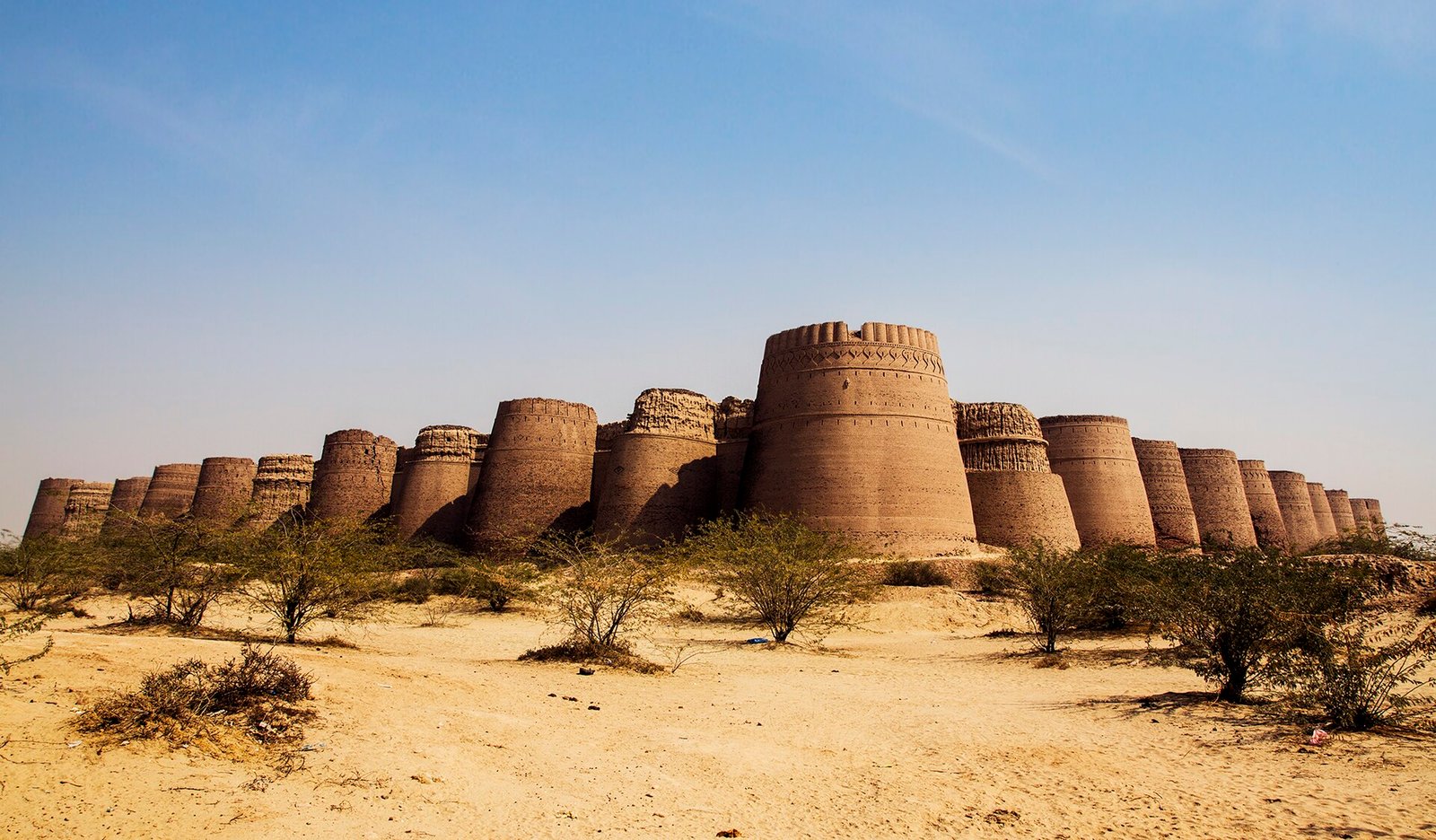
Derawar Fort in the Cholistan Desert near Bahawalpur
Destination guide

Bahawalpur & Cholistan: The Complete Travel Guide

Bahawalpur is the old capital of a princely state of nawabs and palaces, and the gateway to the Cholistan desert, where a huge fort rises from the dunes.

Updated October 2026By The Golden Adventure team
Photo: Rohaan Bhatti / Wikimedia Commons, CC BY-SA 3.0 (source)

Bahawalpur at a Glance

Bahawalpur was founded in 1748 and ruled by the Abbasi nawabs until 1955. Today it is a calm southern Punjab city of palaces, gardens and museums, with the Cholistan desert, the shrines of Uch Sharif and the Lal Suhanra National Park all within reach.

LocationSouthern Punjab, south of the Sutlej River; about 100 km from Multan
ClimateSemi-arid; around 289 mm of rain a year
Best time to visitNovember to February
Getting thereBy road or rail from Multan (under 2 hours), or a domestic flight to the local airport
Top sightsNoor Mahal, Derawar Fort, Uch Sharif, Lal Suhanra National Park
Known forNawabi palaces, the Cholistan Desert Rally, desert forts

Where Is Bahawalpur?

The city sits in the far south of Punjab, close to the Sutlej River and about 100 km from Multan. To the south and east stretches the Cholistan desert, which continues across the border into India’s Thar. The historic town of Uch Sharif is about 84 km to the west, near the Chenab.

The city has a small airport around 6 km from the centre, and it is on the main railway line between Punjab and Sindh. The Empress Bridge, completed in 1878, was the first railway crossing over the Sutlej.

History of the Princely State

The city was established in 1748 by Nawab Bahawal Khan I of the Daudpotra (Abbasi) family, who had moved up from Sindh. Before that, Uch had been the main city of the region, and the family’s earlier stronghold was Derawar Fort, where they took refuge as late as 1785.

Bahawalpur became a princely state in 1802 and acceded to Pakistan on 7 October 1947 under Nawab Sadiq Muhammad Khan Abbasi V. The nawabs ruled until 1955, leaving a remarkable set of palaces. Most are now used by the armed forces, but Noor Mahal is open to the public.

The desert forts

Cholistan has several old forts, and Derawar is the most famous, built in 858 AD by Rai Jajja Bhati, a Rajput ruler linked to Jaisalmer, and later taken over by the Abbasis.

MUST-SEE EXPERIENCES

Top 10 Things to Do in Bahawalpur & Cholistan

Here are the highlights of the city and the desert beyond.

  1. 01
    History

    Noor Mahal

    Completed in 1875 for Nawab Sadiq Muhammad Khan IV, this palace mixes Corinthian columns with Islamic domes. It has 32 rooms and five domes, is owned by the Pakistan Army and is open to visitors, with an evening sound and light show.

  2. 02
    History

    Derawar Fort

    A vast square fort of 40 round bastions in the Cholistan desert, with walls up to 30 m high and a perimeter of about 1,500 m. It is still private property of the former ruling family, so entry inside needs permission; the exterior is spectacular on its own.

  3. 03
    History

    Uch Sharif

    About 84 km from the city, Uch is one of the great Sufi centres of South Asia. The tiled tomb of Bibi Jawindi (1494) and its neighbours were damaged by floods in the early 19th century, and the complex is on UNESCO’s tentative list.

  4. 04
    Nature

    Lal Suhanra National Park

    About 35 km east of the city, this park of nearly 658 km² combines desert, irrigated forest and the Patisar lake. Wildlife includes blackbuck, chinkara and nilgai, and the area is a UNESCO biosphere reserve.

  5. 05
    Adventure

    Cholistan Desert Rally

    Each February, Pakistan’s biggest motorsport event roars across around 500 km of desert near Derawar. The 21st edition ran from 11 to 15 February 2026.

  6. 06
    Adventure

    Jeep safari into the dunes

    Beyond Derawar the desert opens into dunes, small settlements and old water sources. A 4×4 with an experienced local driver is essential.

  7. 07
    History

    Abbasi Mosque at Derawar

    Built in 1849 for the nawab’s religious adviser, the mosque stands near the fort alongside the Moti (Pearl) Mosque and the tombs of the nawabs.

  8. 08
    Culture

    Bahawalpur Museum

    Established in 1976, the city museum is a useful introduction to the region’s past; check opening hours locally.

  9. 09
    Viewpoint

    The palace quarter

    Darbar Mahal (1905) and Gulzar Mahal (1909) are not open to the public, but you can see their facades from outside on a drive around the city.

  10. 10
    Food

    Bazaar food

    Try southern Punjabi dishes and sweets in the old bazaars. A local guide can point you to the most popular stalls.

Best Time to Visit Bahawalpur

Visit from November to February. The desert is far too hot for comfort from April to September, while winter days are pleasant for exploring forts and dunes. Desert nights in winter are cold, so bring warm layers if you plan to camp.

The Cholistan Desert Rally is held in February and attracts large domestic crowds, along with a festive atmosphere. Rooms in the city are in demand that week, and the 2027 dates are announced nearer the time, so plan early.

How to Get to Bahawalpur

Most foreign visitors combine the city with Multan, which has the region’s main airport. Road and rail links between the two are quick.

FromModeDistance / time
MultanCarAbout 100 km; under 2 hours
MultanTrainAbout 1 hour 53 minutes
Rahim Yar KhanCarAbout 200–210 km; roughly 3 hours
Derawar Fort (from the city)4×4 / carSeveral hours return; allow a full day

The city’s small airport (BHV) has limited domestic flights; schedules change, so check close to travel.

Getting Around City and Desert

In the city, a car with driver or rickshaws cover everything easily. For Derawar and the desert, hire a reliable 4×4 with a driver who knows the tracks; the final approach crosses sand and rough desert roads. Uch Sharif and Lal Suhanra are each a half-day or day trip by car.

Where to Stay

Most visitors base themselves in the city, which has mid-range hotels and guest houses. Overnighting in the desert is best arranged with an organised safari.

Suggested Itineraries

Two days

Day 1: Noor Mahal, the museum and a drive past the palace quarter. Day 2: a full-day excursion to Derawar Fort and the Abbasi Mosque.

Four days

Add Uch Sharif and a half day at Lal Suhanra National Park.

Southern Punjab week

Begin in Lahore, spend two days in Multan, then four days in the city and the desert.

What to Pack

  • Warm layers and a hat for cold desert nights
  • Sunglasses, sunscreen and a scarf against sun and blowing sand
  • Closed shoes for forts and dunes
  • A headscarf for women at shrines in Uch
  • Binoculars for Lal Suhanra’s wildlife
  • Cash in rupees for the desert (see money in Pakistan)

Combine with Nearby Destinations

The obvious pairing is Multan, the City of Saints, two hours to the north. From there, many travellers continue to Lahore. Those heading south can reach Sindh via Rahim Yar Khan and the M-5 motorway, but check current advice for each region first.

Culture & Etiquette

Southern Punjab is traditional and family-oriented. Dress modestly, especially in Uch Sharif and at shrines, and ask permission before photographing people, particularly women in desert settlements. In Cholistan, water is precious; take your rubbish with you and do not waste water at wells.

Practical Travel Tips

Safety: Bahawalpur district is not on the UK FCDO’s list of areas to avoid; the US State Department rates Pakistan overall at Level 3, ‘Reconsider travel’. In May 2025, during the India–Pakistan conflict, Indian missiles struck a site on the edge of the city, as reported by The Tribune. Things have since calmed, but regional tensions can change quickly. Check the FCDO advice and read Is Pakistan safe?

Desert travel: Never head into Cholistan without a local driver, spare water and a charged phone; signal is patchy away from the main roads.

Permissions: Derawar Fort is private property; entry beyond the gate requires permission from the former ruling family.

BAHAWALPUR TRAVEL

Bahawalpur Highlights at a Glance

From a nawab’s Italianate palace to a 9th-century desert fort, the city and its hinterland show a side of Pakistan few foreign visitors see.

It is best in winter, combined with Multan’s shrines and, for the adventurous, a few days of desert jeep travel.

For more on Derawar and its history, see the Derawar Fort overview.

Plan your Bahawalpur trip

Bahawalpur & Cholistan FAQs

What is the best time to visit Bahawalpur?

November to February, when days are mild. Summer temperatures in the Cholistan desert are extreme.

Can I go inside Derawar Fort?

The fort is private property of the former ruling family, and entry inside requires permission. The exterior, mosque and tombs can be seen without going in.

Is Noor Mahal open to tourists?

Yes. Although owned by the Pakistan Army, Noor Mahal is open to the public and hosts an evening sound and light show. Darbar Mahal and Gulzar Mahal are not open.

When is the Cholistan Desert Rally?

It is held every February. The 2026 edition ran from 11 to 15 February; 2027 dates are announced nearer the time.

How far is it from Multan?

About 100 km, under 2 hours by car or around 2 hours by train.

Is Bahawalpur safe for foreign tourists?

The district is not on the UK FCDO’s list of areas to avoid, but the US rates Pakistan overall as Level 3 and the city was hit by missiles during the May 2025 conflict. Check current advice and travel with a local operator.

Can I see wildlife at Lal Suhanra?

Yes. The park is home to blackbuck, chinkara and nilgai, and the Patisar lake adds wetland birdlife.

TGA AI AssistantOnline · usually replies in seconds
AI can make mistakes. Please don't share personal, passport or card details.