
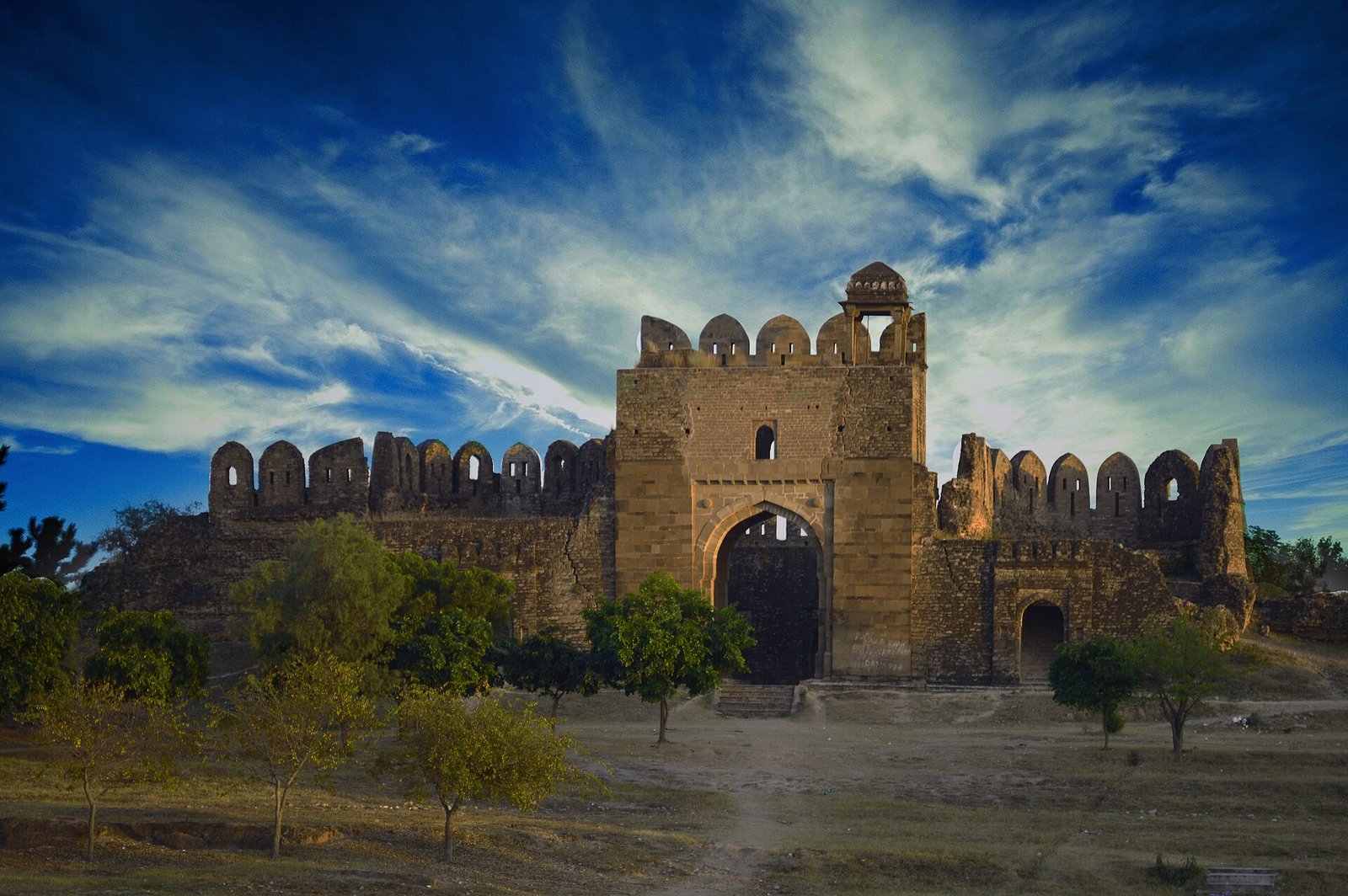
Rohtas Fort at a Glance
Rohtas Fort (Qila Rohtas) was begun by the Afghan ruler Sher Shah Suri in 1541 and was inscribed as a UNESCO World Heritage Site in 1997. Its walls run for more than 4 km around a 70-hectare hilltop, with 68 bastions and 12 monumental gateways.
LocationNear Dina, Jhelum district, Punjab; about 16 km north-west of Jhelum city
BuiltFrom 1541, by Sher Shah Suri; construction supervised by Todar Mal
Best time to visitOctober to March
Getting thereAbout 2 hours by road from Islamabad, 3–3.5 hours from Lahore
Top sightsSohail Gate, Kabuli Gate, royal stepwell, Shahi Mosque, Haveli Man Singh
Known forMilitary architecture, 4 km of walls, a living village inside the walls
