
Multan at a Glance
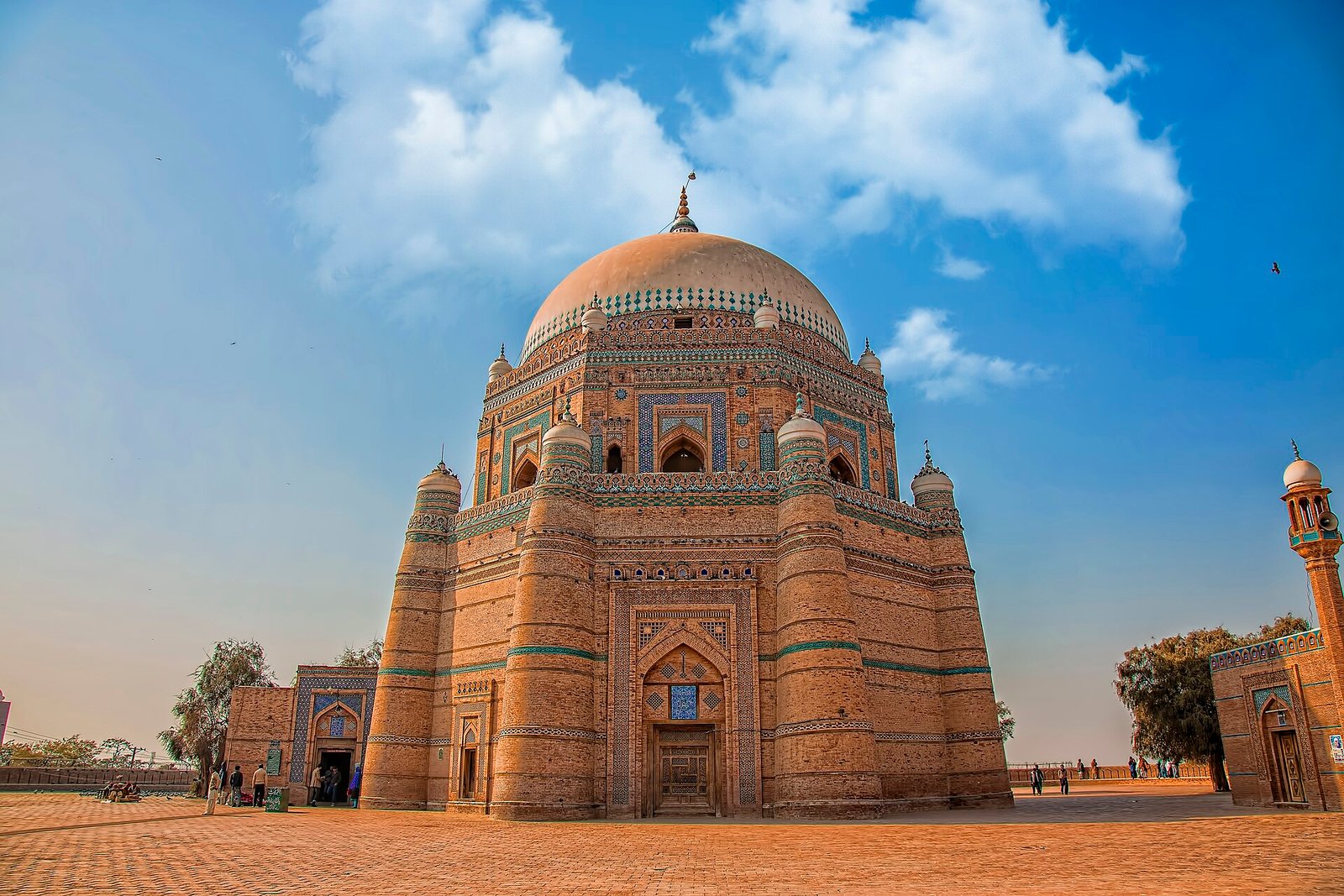
Multan is a city of more than two million people on the east bank of the Chenab, and Pakistan’s sixth-largest city. Sufi saints settled here from the 11th century onwards, leaving magnificent tombs that still draw pilgrims from across South Asia.
LocationSouthern Punjab, on the east bank of the Chenab River
PopulationAbout 2.2 million (2023 census)
Best time to visitNovember to February; summers are among the hottest in Pakistan
Getting thereMultan International Airport, or about 333 km from Lahore by motorway
Top sightsShah Rukn-e-Alam, Bahauddin Zakariya, Shah Shams Sabzwari, the walled city
Known forSufi shrines, blue glazed tiles, sohan halwa, mangoes
