thegoldenadventure.com

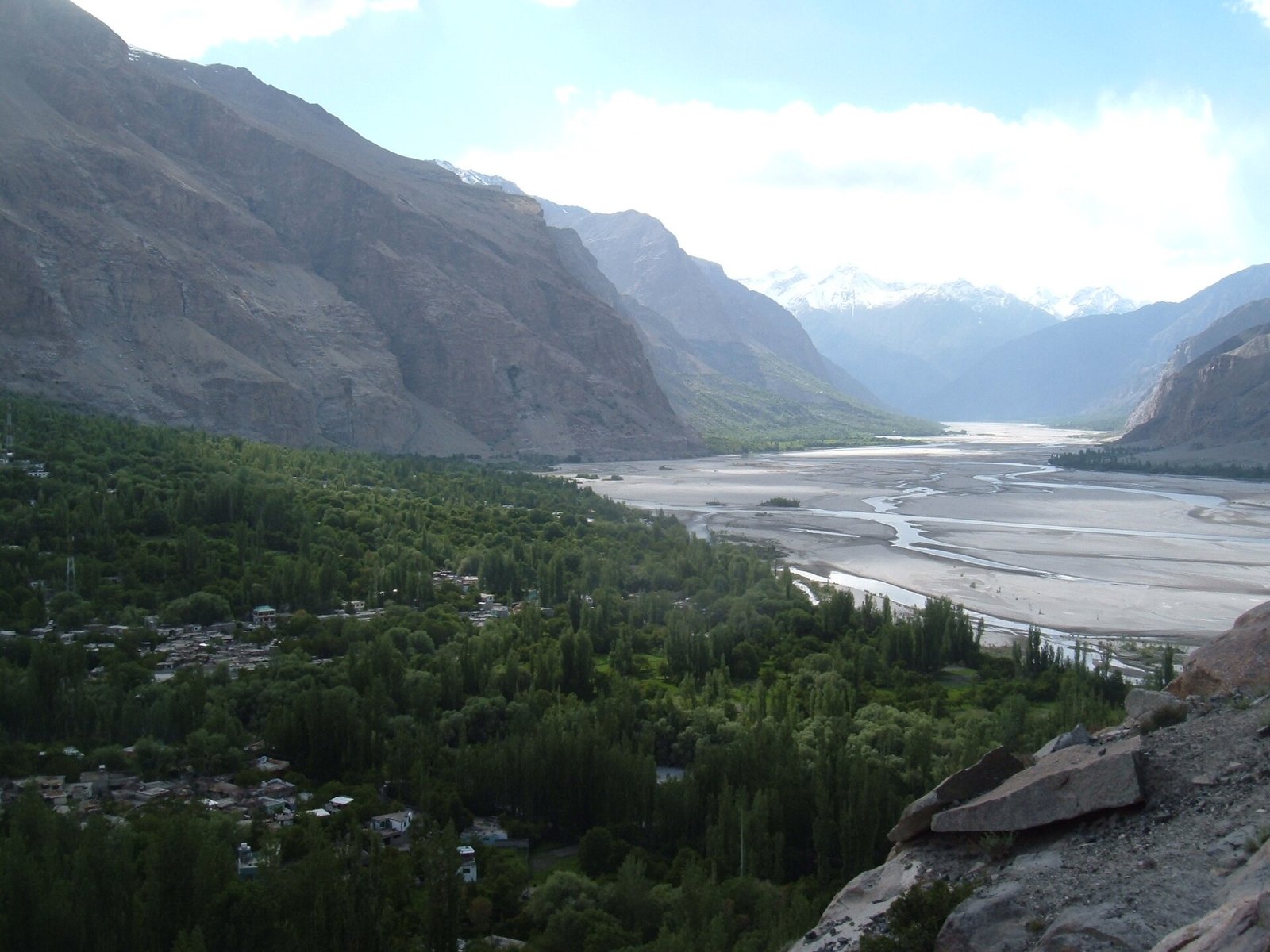
Khaplu and the Shyok River in Ghanche, Baltistan
Destination guide

Khaplu: The Complete Travel Guide

Khaplu, the old capital of the Yabgo rajas, sits on terraces above the Shyok River with a restored royal palace, one of Baltistan’s oldest mosques and Masherbrum glinting at the head of the Hushe valley.

Updated October 2026By The Golden Adventure team
Photo: Balti sahib / Wikimedia Commons, CC BY-SA 4.0 (source)

Khaplu at a Glance

Khaplu is the main town of Ghanche District in eastern Baltistan, about 103 km east of Skardu. It is known for its beautifully restored royal palace, the 14th-century Chaqchan Mosque and as the gateway to Hushe, Masherbrum and the Gondogoro La.

LocationGhanche District, Baltistan, Gilgit-Baltistan, on the Shyok River
AltitudeAbout 2,600 m
Best time to visitApril–October
Getting there103 km from Skardu, about 3–4 hours by paved road
Top sightsRoyal palace, Chaqchan Mosque, Thoqsikhar, Masherbrum viewpoint, Saling
Known forYabgo royal heritage, Balti culture, gateway to Hushe

Where Is Khaplu?

Khaplu lies in the far east of Gilgit-Baltistan, about 103 km east of Skardu along the Shyok River, near its confluence with the Indus. The town spreads across alluvial terraces at roughly 2,600 m, with orchards and stone-walled fields climbing the slopes behind it.

It is the administrative capital of Ghanche District. North of town, across the Shyok, the Hushe valley leads to the base of Masherbrum (7,821 m) and the glaciers of the Karakoram, while further east the Shyok and Saltoro valleys run towards the Line of Control and the Siachen area – a military zone that is off-limits to tourists.

History & People of the Yabgo Kingdom

After the Tibetan empire broke up in the 10th century, the town emerged as the seat of an independent kingdom. Under the Yabgo dynasty it became the second-largest kingdom in Baltistan, guarding the trade route up the Shyok River to Ladakh. Its rulers used the old Turkic title Yabghu.

In 1840 Raja Daulat Ali Khan built the palace that still dominates the town. Islam had arrived centuries earlier through the Persian saint Syed Ali Hamadani, to whom the Chaqchan Mosque is attributed, and the Noorbakhshi Sufi order remains important here. The people are Balti, speaking a Tibetan-related language, and the town keeps a slower, more traditional pace than Skardu.

Visitors often notice the architecture first. Old houses and religious buildings use layered timber and stone, with carved wooden balconies and window frames that show links to both Tibet and Kashmir. Several of them, including the palace and the Astana, were conserved by the Aga Khan Trust for Culture.

MUST-SEE EXPERIENCES

Top 9 Things to Do in Khaplu

Plan at least one night to enjoy these highlights properly.

  1. 01
    History

    Tour the royal palace

    Built in 1840 and restored by the Aga Khan Trust for Culture between 2005 and 2011, the palace blends Balti, Tibetan and Kashmiri styles in timber and mud brick. It won a UNESCO Asia-Pacific Award of Distinction in 2013 and houses a museum and a Serena hotel.

  2. 02
    Culture

    See the Chaqchan Mosque

    Often described as about 700 years old, this mosque is famous for its carved woodwork and Tibetan-influenced design. Non-Muslims are generally asked to view it from outside, which is still well worth it.

  3. 03
    Viewpoint

    Catch the Masherbrum viewpoint

    About 30 minutes from town, a roadside viewpoint looks up the Hushe valley to Masherbrum, the peak first surveyed as K1 in 1856. Morning light is usually clearest.

  4. 04
    Culture

    Climb to Thoqsikhar

    Above the palace, the hilltop at Thoqsikhar has a small mosque, rock-climbing crags and sweeping views over the Shyok. It is a favourite spot at golden hour.

  5. 05
    History

    Visit the Khanqah and Astana

    The town’s Khanqah prayer hall dates from 1712 and was built by a saint of the Noorbakhshi order. The nearby Astana grave monument was restored by the Aga Khan Trust for Culture.

  6. 06
    Nature

    Cross the river to Saling

    The village of Saling, across the Shyok, is known for meadows, streams and trout from local ponds. The road is rougher than the main highway, so go by 4×4.

  7. 07
    Nature

    Picnic at Hanjor meadows

    A short drive from town, Hanjor is where local families come for picnics in summer. It is a relaxed way to spend an afternoon.

  8. 08
    Nature

    Explore Kharfaq and nearby lakes

    The Ghanche area has several small lakes, including Kharfaq and Sogha, reached on side trips from town. Ask locally about road conditions before setting out.

  9. 09
    Adventure

    Head up the Hushe valley

    Hushe is the trailhead for the Gondogoro La, Masherbrum base camp and Laila Peak base camp treks. Even a day trip up the valley gives superb mountain views.

Best Time to Visit Khaplu

April to October is the best period. Spring brings apricot blossom, summer is ideal for side trips to Hushe and Saling, and autumn is clear and colourful. July and August can bring cloudbursts and flash floods across Gilgit-Baltistan, as happened in 2025, so allow spare days.

Winter is very cold and many guesthouses close, but the town remains inhabited and the palace is beautiful under snow.

How to Get to Khaplu

Fly to Skardu (about an hour from Islamabad, weather permitting) and continue by road along the Indus and Shyok. See our guide on how to get to Skardu.

RouteDistanceTypical time
Islamabad – Skardu (flight)–About 1 hour
Skardu – town centre103 km3–4 hours by road
Town – Masherbrum viewpoint–About 30 minutes
Gilgit – SkarduAbout 200 km4–6 hours

Shared minibuses run on this route, but a private car with driver is more comfortable and lets you stop along the river.

Getting Around Town and the Valleys

The palace, Chaqchan Mosque and old lanes are walkable, though the town is spread out and steep in places. For Thoqsikhar, Saling, Hanjor and Hushe, hire a car or 4×4 with a local driver, who can also help at checkpoints.

The road up the Hushe valley passes Machulo, roughly halfway, which is the base for the Machulo La trek, and Kanday, from where a steep walk of about five hours with 1,200 m of ascent leads into the Nangma valley, famous for its granite walls. Both make memorable side trips for active travellers who are not doing a full expedition-style trek.

Where to Stay: Palace Hotel or Guesthouse

The Serena hotel within the palace is the landmark choice, with rooms in the restored residential wing. Smaller family-run hotels and guesthouses around town offer home-cooked meals and gardens, though few are listed online. Further up the Hushe valley, accommodation is in simple guesthouses and camps.

Suggested Itineraries

Overnight from Skardu

Drive out in the morning, visit the palace and Chaqchan Mosque, sunset at Thoqsikhar; next day the Masherbrum viewpoint and Saling before returning.

Three days

Add a day trip up the Hushe valley and an afternoon at Hanjor.

Within a Baltistan week

Combine the town with Skardu, Shigar and Deosai, as in our Skardu itinerary.

What to Pack

  • Modest, loose clothing and a headscarf for women.
  • Layers for cool mornings and evenings.
  • Comfortable shoes for steep lanes.
  • Sun protection.
  • Cash in Pakistani rupees and copies of your passport and visa for checkpoints.

Culture & Etiquette

Ghanche is conservative and deeply religious. Dress modestly, ask before photographing people, and do not enter mosques or shrines without permission. During Muharram there are processions and mourning gatherings; be respectful and discreet. Try local Balti food, such as kaseer bread with butter tea, and buy dried apricots from village producers.

Practical Travel Tips for Khaplu

Safety and advisories: The US State Department rates Pakistan Level 3 and lists the immediate vicinity of the Line of Control as Do Not Travel, and the UK FCDO advises against all travel within 10 miles of the LoC. The town itself is a normal tourist destination, but valleys further east towards the LoC and Siachen are restricted military zones. Do not travel beyond the town, Saling and Hushe without checking current rules.

Permits and checkpoints: Khaplu and Hushe village are generally open to foreigners. Expect police and GB Scouts checkpoints where your passport details are recorded. Treks over the Gondogoro La or near the Baltoro need an NOC; see our NOC guide.

Money: Bring cash from Skardu. A ticket is charged for non-guests to tour the palace (reports in 2025–2026 ranged from about PKR 800 to 1,200).

KHAPLU TRAVEL

Khaplu Highlights at a Glance

Khaplu rewards travellers who go beyond Skardu with royal heritage, centuries-old mosques and some of the finest mountain views in Baltistan.

Stay at least one night, visit between April and October, and use the town as a base for the Hushe valley.

Read more about the palace restoration on Wikipedia’s page on the palace.

Plan your Khaplu trip

Khaplu FAQs

How far is Khaplu from Skardu?

About 103 km, usually 3–4 hours by paved road along the Indus and Shyok rivers.

Is Khaplu safe for tourists?

The town is a normal tourist destination, but it lies in a district bordering the Line of Control, which the US lists as Do Not Travel and the UK advises against within 10 miles. Stay within open areas and check current advice.

Can non-guests visit Khaplu Palace?

Yes, usually with a ticket. Reported prices in 2025–2026 were around PKR 800–1,200.

Can non-Muslims enter the Chaqchan Mosque?

Visitors report that non-Muslims are generally asked to view it from outside. Ask respectfully on arrival.

What is the best time to visit?

April to October, with blossom in spring and clear skies in autumn.

Do foreigners need a permit to visit?

No special permit for the town, but expect checkpoints. Areas towards the LoC and Siachen are restricted, and some treks need an NOC.

Where does the road to Hushe start?

Yes. The road to Hushe, the trailhead for Masherbrum and Gondogoro La treks, starts just across the Shyok from town.

TGA AI AssistantOnline · usually replies in seconds
AI can make mistakes. Please don't share personal, passport or card details.