thegoldenadventure.com

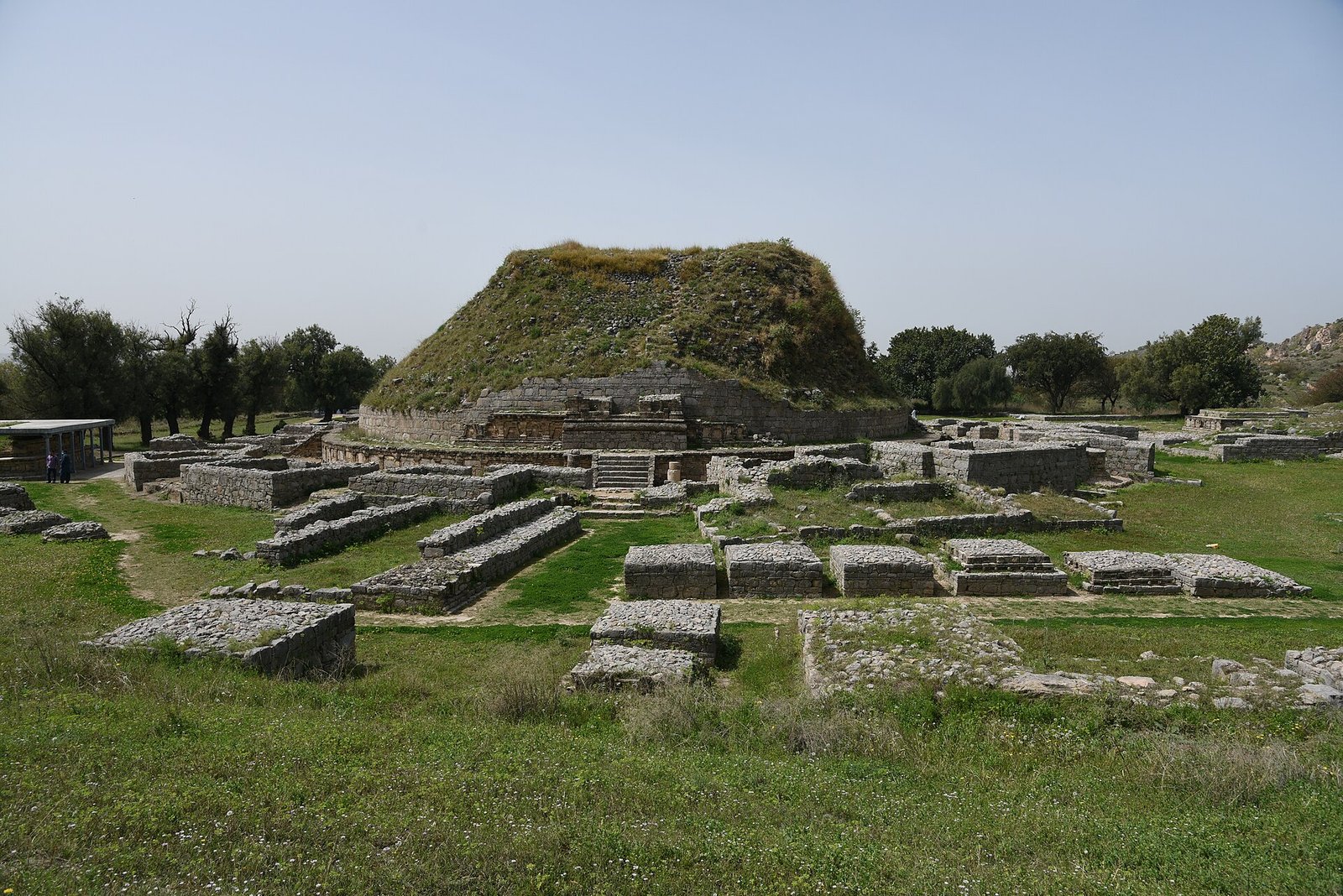
Taxila: Dharmarajika Stupa and monastery ruins
Destination guide

Taxila: The Complete Travel Guide

Taxila is where Persian, Greek, Mauryan and Kushan worlds met, and where Gandhara’s Buddhist art reached its peak, all an easy drive from Islamabad.

Updated October 2026By The Golden Adventure team
Photo: Mhtoori / Wikimedia Commons, CC BY-SA 4.0 (source)

Taxila at a Glance

Taxila is a UNESCO World Heritage Site in Punjab’s Rawalpindi district, inscribed in 1980. It is not one ruin but a cluster of cities, monasteries and stupas spread across a green valley, spanning roughly a thousand years from the Achaemenid period to the Huns.

LocationRawalpindi district, Punjab; about 32 km north-west of Islamabad
AltitudeAbout 549 m (1,801 ft)
Best time to visitOctober to March (mild days); avoid the May–June heat
Getting thereBy road from Islamabad or Rawalpindi via the N-5 (GT Road); the town also has a railway station
Top sightsThe museum, Dharmarajika Stupa, Sirkap, Jaulian, Mohra Moradu, Bhir Mound
Known forGandhara Buddhist art, Alexander the Great (326 BC), Indo-Greek city planning

Where Is Taxila?

The Taxila valley lies in the far north of Punjab, close to the border with Khyber Pakhtunkhwa. The modern town is about 32 km north-west of Islamabad and 35 km from Rawalpindi, so most visitors base themselves in the capital and come out for the day.

The Grand Trunk Road (now the N-5) runs right through the area, as it did when traders and armies moved between Central Asia and the plains of India. Today the town is also an industrial centre, home to a major defence-engineering firm, and neighbouring Wah Cantt is a large ordnance-factory town. The archaeological sites sit just outside this modern sprawl, mostly within a few kilometres of the museum.

A Short History

The first major settlement, on the Hathial mound, dates to around 1000 BC. The valley later came under Achaemenid Persian rule, and in 326 BC its ruler, Ambhi, surrendered the city to Alexander the Great without a fight. UNESCO links Alexander’s arrival to the Bhir Mound, the oldest of the city sites you can walk today.

Under the Mauryans, and especially Ashoka, the city became a great centre of Buddhist learning. Tradition connects it with Chanakya (Kautilya), adviser to the Mauryan court, and the grammarian Panini. The Indo-Greeks built a new planned city, Sirkap, in the 2nd century BC; the Kushans followed and founded Sirsukh. The Chinese pilgrim Faxian visited around 400 AD, but by Xuanzang’s visit around 630 AD many monasteries lay in ruins after the Huns swept through in the 5th century.

Rediscovery

Alexander Cunningham identified the site in the 1860s, and Sir John Marshall excavated here for about two decades from 1913. In April 2026 the Punjab Department of Archaeology announced a three-year, Rs3.97 billion project running to 2028 to conserve the sites and improve visitor facilities, including new museum galleries and a craft bazaar on Museum Road.

MUST-SEE EXPERIENCES

Top 9 Things to Do in Taxila

These are the sites and experiences we would put on any day here, roughly in the order most people visit them.

  1. 01
    Culture

    Taxila Museum

    Opened on 5 April 1928, the museum holds thousands of objects from Marshall’s excavations: Gandhara stone sculpture, stucco heads, coins and jewellery. A separate gallery displays bone relics of the Buddha found at Dharmarajika, in a showcase gifted by Thailand.

  2. 02
    History

    Dharmarajika Stupa

    Built by Ashoka to enshrine relics of the Buddha, this is the largest stupa in the valley at 131 ft across. The complex was used from the 3rd century BC to the 7th century AD and is about 3 km from the museum.

  3. 03
    History

    Jaulian Monastery

    On a hill about 100 m above Jaulian village, this 2nd-century monastery has two-storey monks’ cells, small stupas with surviving stucco Buddhas, and the famous ‘Healing Buddha’ with a hole in its navel where pilgrims once placed a finger while praying.

  4. 04
    History

    Sirkap

    The Indo-Greek city laid out on a Greek-style grid, with one main street and fifteen side streets. Look for the Double-Headed Eagle Stupa, whose facade mixes a Greek pediment, an Indian arch and a Babylonian eagle motif.

  5. 05
    History

    Mohra Moradu

    A monastery in a small valley about 1.5 km from Sirsukh, with around 27 monks’ rooms set round a courtyard with a ritual pool, a main stupa and a smaller votive stupa behind it. It is usually quiet.

  6. 06
    History

    Bhir Mound

    The oldest city site, probably founded in the 6th century BC, sits a five-minute walk from the museum. The excavated lanes are modest, but this is the town Alexander’s army entered.

  7. 07
    History

    Jandial Temple

    An Ionic-style temple about 650 m from Sirkap, possibly linked to a Zoroastrian cult. It is one of the clearest traces of Greek architecture in South Asia.

  8. 08
    Culture

    Stone-carving workshops

    The town still has cottage industries in stoneware and pottery. Small workshops near the museum produce Gandhara-style carvings; buy reproductions only, never anything sold as an antique.

  9. 09
    Food

    A chai stop on Museum Road

    Between sites, a sweet milky chai under the trees is part of the day. Bring water and snacks, as choice near the ruins is limited.

Best Time to Visit Taxila

The best months are October to March, when days are mild and clear. December and January mornings can be cool and hazy but are fine for walking. From April the heat builds quickly, and May and June are hard work on exposed hilltop sites such as Jaulian. The July–September monsoon brings humidity and heavy showers.

The museum’s official site lists summer hours of 8:30 am to 5 pm and winter hours of 9 am to 4 pm, and notes closures on the first Monday of each month and on Islamic holidays. Hours can change, so check close to your visit.

How to Get to Taxila

Most travellers come from Islamabad by private car. Allow about an hour in normal traffic each way. There is also a railway station in town, but trains are slow and the sites are spread out, so you would still need a car or rickshaw.

FromDistanceTypical timeNotes
IslamabadAbout 32 kmAround 1 hourEasiest base; private car recommended
RawalpindiAbout 35 kmAround 1 hourVia the N-5 GT Road

Times are approximate and depend heavily on traffic around Rawalpindi and the GT Road.

Getting Around the Sites

The main sites are a few kilometres apart, linked by narrow village roads. A car and driver is by far the easiest option, letting you move from the museum to Dharmarajika, Sirkap and Jaulian in one loop. Jaulian involves a short, steep climb up steps, and Sirkap is a flat but sunny walk of a kilometre or more.

A knowledgeable guide makes a huge difference here, because many ruins are low walls and foundations. Without context it is easy to miss the stucco details, the reliquary sites and how the three cities relate to each other.

Where to Stay Nearby

Most foreign visitors stay in Islamabad, which has the widest choice of international and mid-range hotels and is under an hour away. The town itself has a small number of simple local hotels, but facilities are basic and there is little reason to stay overnight unless you are on a pilgrimage schedule or want a very early start at the ruins.

Suggested Itineraries

Half day (4–5 hours)

The museum, Dharmarajika Stupa and Jaulian. This covers the best art, the biggest stupa and the best-preserved monastery.

Full day

Add Sirkap, the Jandial temple and Mohra Moradu, with lunch in between. Start early in warm months so you are on Jaulian’s hill before midday.

Two-day Gandhara trail

Combine the valley with Takht-i-Bahi, the other Gandhara monastery on the UNESCO list. Check current travel advice first, as Takht-i-Bahi is in Khyber Pakhtunkhwa.

What to Pack

  • Comfortable walking shoes with grip for uneven stone steps
  • Sun hat, sunglasses and sunscreen; there is little shade at Sirkap
  • A refillable water bottle and snacks
  • A light scarf or shawl, useful for modesty and sun
  • Small Pakistani rupee notes for entry tickets, parking and tips
  • A warm layer for winter mornings

Combine with Nearby Destinations

Taxila fits neatly into a few days around the capital. Gurdwara Panja Sahib at Hasan Abdal, about 40 km north-west of Islamabad, is close enough to add on the same day, especially for Sikh visitors on a Panja Sahib Yatra.

Heading south, Rohtas Fort near Jhelum makes a good stop on the drive to Lahore. For the bigger picture, see our guide to UNESCO sites in Pakistan.

Culture & Etiquette

The stupas are archaeological sites but remain sacred to Buddhists, and pilgrims from Thailand, Sri Lanka, China and elsewhere visit regularly. Walk clockwise around stupas if you wish to follow tradition, never climb on ruins or stucco, and do not touch the carvings.

This is a conservative Punjabi town. Shoulders and knees covered is the norm for everyone, and asking before photographing local people is always appreciated.

Practical Travel Tips

Safety: The valley is in Punjab’s Rawalpindi district, which is not among the areas the UK FCDO advises against visiting. The US State Department rates Pakistan overall at Level 3, ‘Reconsider travel’. Read the latest FCDO advice, the US advisory and our honest guide Is Pakistan safe? before you go.

Tickets: The museum and the main sites charge modest entry fees, with a higher rate for foreign visitors. Carry cash in rupees.

Visas: You will need a Pakistan visa; see our Pakistan visa guide. No special permit is needed for the sites.

Connectivity: Mobile data works well in and around the town.

TAXILA TRAVEL

Taxila Highlights at a Glance

The valley rewards curious travellers: a planned Greek-style city, an Ashokan stupa and monasteries where Gandhara sculptors blended Greek and Indian styles into the first human images of the Buddha.

It is one of the easiest heritage trips in Pakistan, close to Islamabad, open year-round and best enjoyed with a guide who can bring the low ruins to life.

For the official description of the property and its components, see the UNESCO World Heritage listing.

Plan your Taxila trip

Taxila FAQs

How far is Taxila from Islamabad?

It is about 32 km north-west of Islamabad, usually around an hour by car depending on traffic. Most visitors do it as a day trip.

How much time do I need for the sites?

Half a day covers the museum, Dharmarajika and Jaulian. A full day lets you add Sirkap, Jandial and Mohra Moradu without rushing.

What are the Taxila Museum opening hours?

The official museum site lists 8:30 am to 5 pm in summer and 9 am to 4 pm in winter, closed on the first Monday of each month and Islamic holidays. Confirm before you go, as hours can change.

Is Taxila safe for foreign tourists?

The site is in Punjab’s Rawalpindi district, which is not on the UK FCDO’s list of areas to avoid. The US rates Pakistan overall as Level 3, so check current advice and travel with a reputable local operator.

Why is Taxila a UNESCO World Heritage Site?

UNESCO inscribed the property in 1980 because its city sites show urban development on the subcontinent over many centuries, and because of its links with Alexander the Great and Buddhist learning.

Can Buddhist pilgrims see relics of the Buddha here?

Yes. Bone relics of the Buddha found at Dharmarajika are displayed in a dedicated gallery at the museum.

When is the best season to visit?

October to March is the most comfortable. Summer heat from April to June makes the hilltop sites tiring by late morning.

TGA AI AssistantOnline · usually replies in seconds
AI can make mistakes. Please don't share personal, passport or card details.