
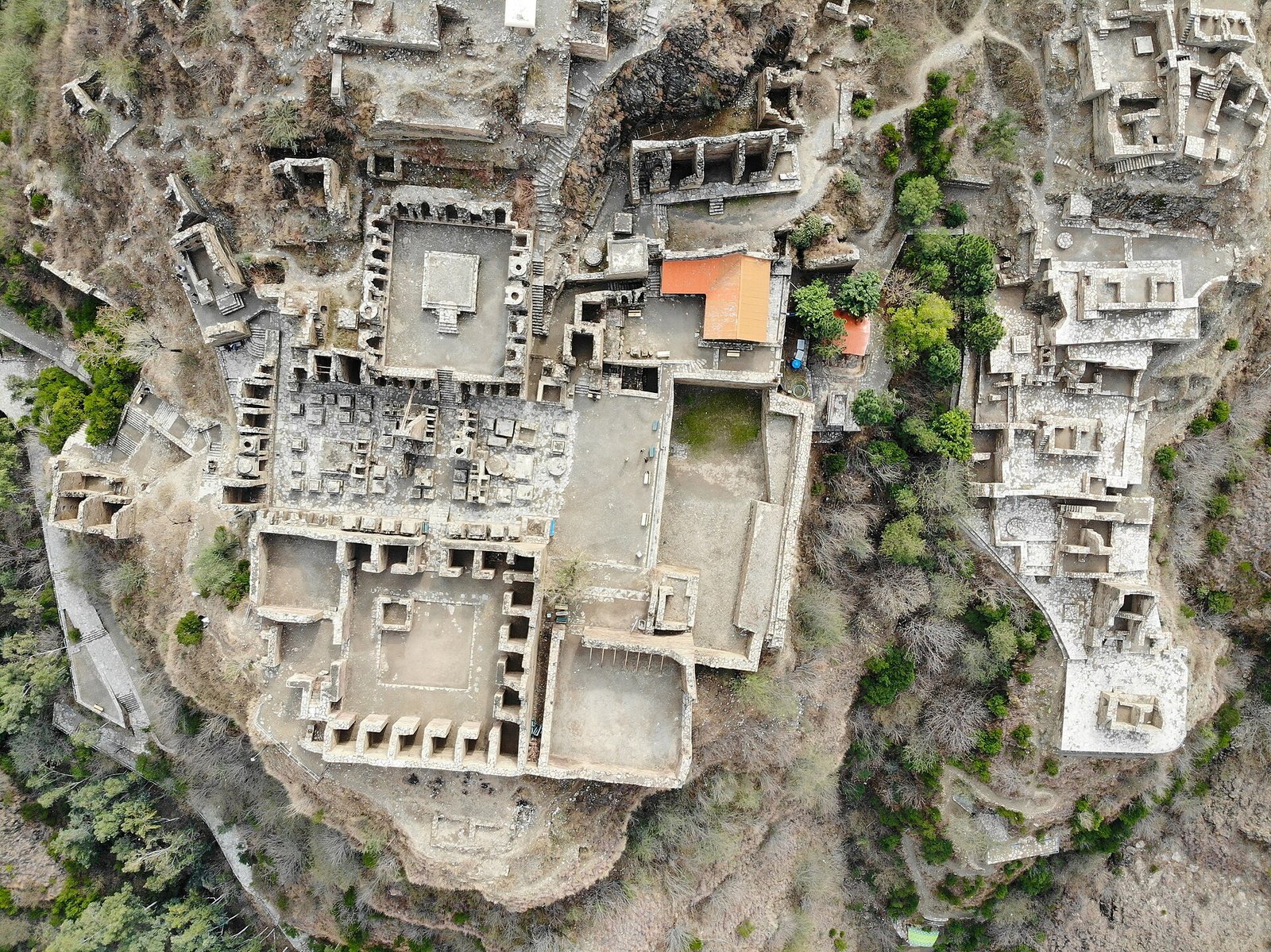
Takht-i-Bahi at a Glance
Takht-i-Bahi is a Buddhist monastic complex on a rocky ridge about 15 km north-west of Mardan, inscribed by UNESCO in 1980 together with the nearby fortified town of Sahr-i-Bahlol. Founded in the early 1st century CE and used until the 7th century, it shows the full layout of a Gandharan monastery more clearly than any other site in Pakistan.
LocationNear Takht Bhai town, Mardan district, Khyber Pakhtunkhwa
AltitudeRuins sit about 150 m above the surrounding plain
Best time to visitOctober to March; mornings are best
Getting thereAbout 15 km from Mardan, 65–80 km from Peshawar; usually a day trip from Islamabad
Top sightsMain Stupa Court, monastic quadrangle, assembly hall, Tantric cells, Sahr-i-Bahlol
Known forUNESCO World Heritage Site (1980), Gandharan Buddhist architecture
