
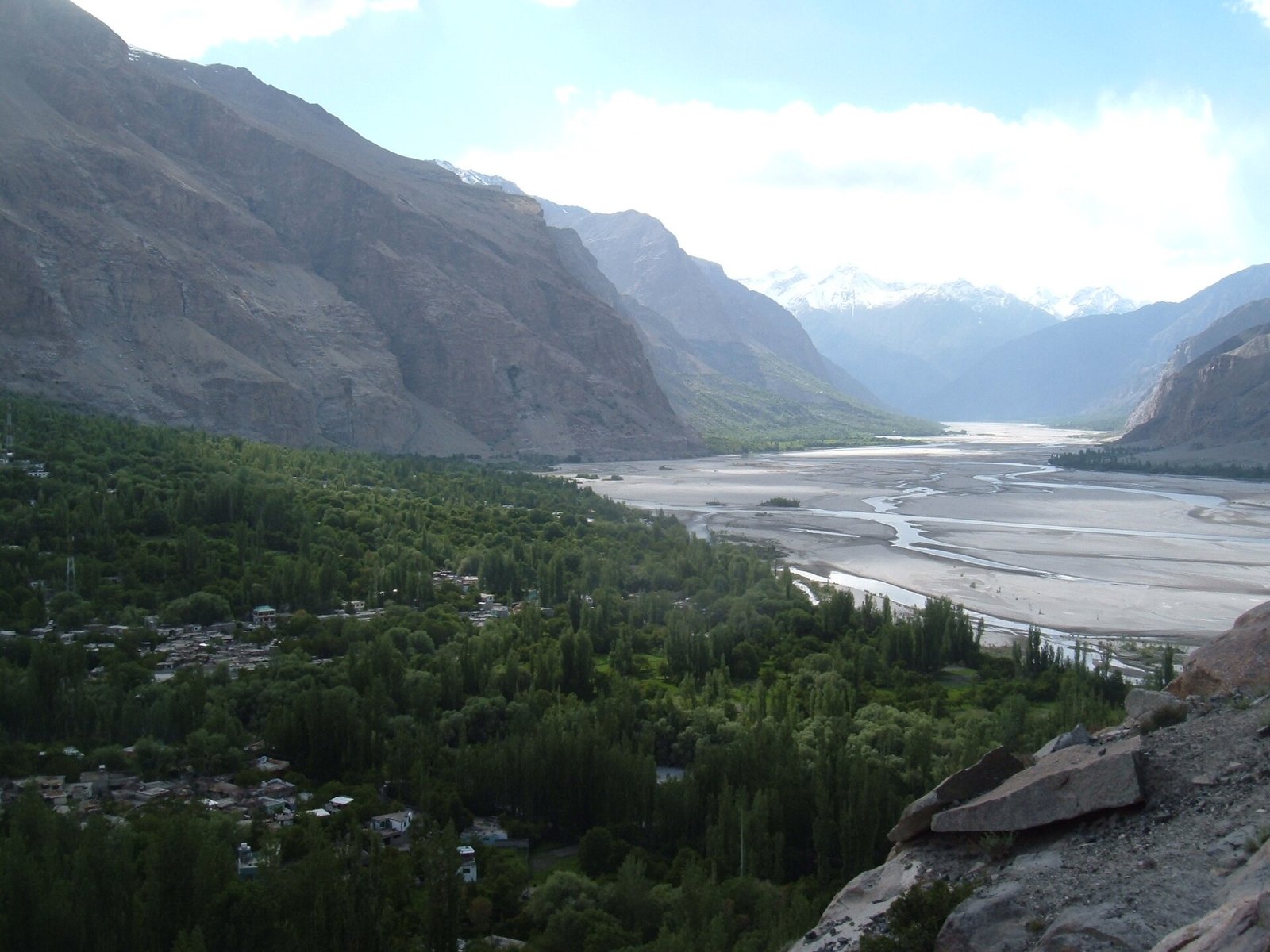
Khaplu at a Glance
Khaplu is the main town of Ghanche District in eastern Baltistan, about 103 km east of Skardu. It is known for its beautifully restored royal palace, the 14th-century Chaqchan Mosque and as the gateway to Hushe, Masherbrum and the Gondogoro La.
LocationGhanche District, Baltistan, Gilgit-Baltistan, on the Shyok River
AltitudeAbout 2,600 m
Best time to visitApril–October
Getting there103 km from Skardu, about 3–4 hours by paved road
Top sightsRoyal palace, Chaqchan Mosque, Thoqsikhar, Masherbrum viewpoint, Saling
Known forYabgo royal heritage, Balti culture, gateway to Hushe
