thegoldenadventure.com

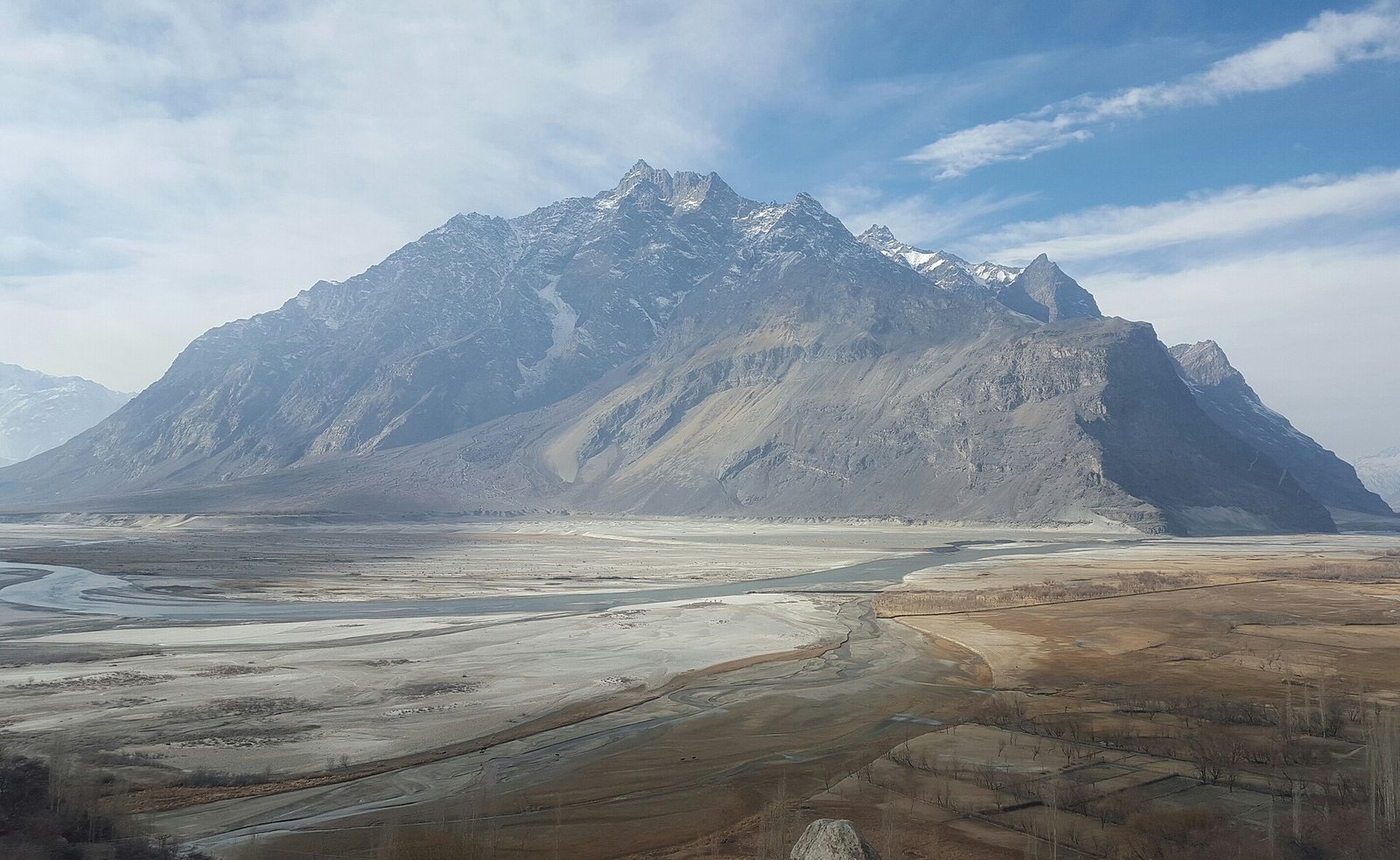
Shigar Valley and its mountains near Skardu, Baltistan
Destination guide

Shigar Valley: The Complete Travel Guide

Half an hour from Skardu, Shigar Valley mixes a 17th-century palace, a 700-year-old wooden mosque and apricot orchards with the road that leads every K2 expedition towards the Baltoro Glacier.

Updated October 2026By The Golden Adventure team
Photo: Abcxyz907 / Wikimedia Commons, CC BY-SA 4.0 (source)

Shigar Valley at a Glance

Shigar Valley runs north from Skardu for about 170 km to Askole, the last village before the Baltoro Glacier and K2. Its main town is home to the restored Shigar Fort and Amburiq Mosque, while side valleys hide hot springs, glaciers and a cold desert.

LocationShigar District, Baltistan, Gilgit-Baltistan
AltitudeShigar town about 2,300 m; Askole about 3,000 m
Best time to visitApril–October; blossom in April, autumn colour in October
Getting thereAbout 30 km from Skardu, 30–60 minutes by road
Top sightsShigar Fort, Amburiq Mosque, Blind Lake, Sarfaranga cold desert
Known forBalti heritage, orchards, gateway to K2

Where Is Shigar Valley?

Shigar Valley lies in Baltistan, in eastern Gilgit-Baltistan, just north of Skardu. The Shigar River flows down from the Baltoro and Biafo glaciers to meet the Indus near Skardu, and the valley follows it upstream for about 170 km to Askole. Shigar town, the district headquarters, is roughly 30 km from Skardu city.

Shigar became its own district in 2015, after being part of Skardu District. It covers about 4,173 km² and had a population of around 85,000 in 2023. The district’s northern boundary runs along the crest of the Karakoram, so K2 itself stands within it.

A good paved road runs from Skardu through Shigar town and up the valley to Dassu. Beyond Dassu, a rough jeep track continues through the Braldu gorge to Askole, the trailhead for the K2 base camp trek.

History & People of Shigar Valley

Shigar sat on an old trading route from Central Asia and was ruled for centuries by the Amacha dynasty. Their first fort was built in the 11th century; the present Shigar Fort, called Fong Khar or “Palace on the Rock”, dates from the 17th century. Islam spread here in the 14th century, and the Amburiq Mosque is linked to the Persian saint Syed Ali Hamdani.

The people are Balti, speaking a Tibetan-related language, and are predominantly Shia Muslims. Agriculture is the backbone of the valley: apricots, apples, cherries, mulberries, walnuts and grapes grow on irrigated terraces beside the river. Polo is still played across Baltistan.

MUST-SEE EXPERIENCES

Top 9 Things to Do in Shigar Valley

These are the experiences that make Shigar worth more than a quick detour from Skardu.

  1. 01
    History

    Explore Shigar Fort

    Restored by the Aga Khan Cultural Service Pakistan between 1999 and 2004, the fort now houses a heritage museum and a Serena hotel. It won a UNESCO Asia-Pacific Heritage Award in 2006.

  2. 02
    Culture

    See the Amburiq Mosque

    Built in the 14th century in a Tibetan-Kashmiri wooden style, the small Amburiq Mosque was restored with the local community and received a UNESCO Asia-Pacific Heritage Award in 2005. Ask permission before entering.

  3. 03
    Nature

    Walk the Sarfaranga cold desert

    At about 2,300 m, where the Shigar and Indus rivers meet, the Sarfaranga dunes form a striking high-altitude cold desert. Winter temperatures fall below −25 °C, and a jeep rally has been held here most years since 2017.

  4. 04
    Nature

    Visit Blind Lake

    Called Jarba Zhou locally, Blind Lake has no visible inlet or outlet and is fed by underground seepage. It lies near the Sarfaranga desert, about 20 km before Shigar town.

  5. 05
    Nature

    Soak in the Chutron hot springs

    In the Basha valley, about 6 km beyond Tisar, the Chutron springs reach more than 40 °C. Local people travel long distances to bathe here for their medicinal reputation.

  6. 06
    History

    Stroll through Hashupi Bagh

    This historic garden complex in the valley dates to the Mughal era. Its old trees and water channels make a peaceful stop in summer.

  7. 07
    Nature

    See the apricot blossom

    In April and early May the orchards of Shigar burst into white and pink blossom, making it one of the best spring destinations in Baltistan.

  8. 08
    Adventure

    Drive to Arandu and the Chogo Lungma Glacier

    At the head of the Basha valley, Arandu sits at about 3,000 m beside the Chogo Lungma Glacier. The drive from Skardu takes around three hours.

  9. 09
    Adventure

    Head towards K2 via Askole

    The Braldu jeep track to Askole is the start of the K2 base camp, Gondogoro La and Snow Lake treks. Even a day trip up the gorge shows the scale of the landscape.

Best Time to Visit Shigar Valley

April to October is the main season. April and early May bring blossom, June to September is warm and suits side trips to Basha and Askole, and October paints the poplars and orchards gold. Summer is also expedition season, when Askole bustles with trekkers heading for K2.

Winter is cold and quiet, with fewer services open; check road conditions before travelling. The cold desert is especially striking under snow. In July and August, watch for flash floods and landslides on side roads; Gilgit-Baltistan saw severe flooding in summer 2025.

How to Get to Shigar Valley

The gateway is Skardu, reached by a flight of about an hour from Islamabad or by road from Gilgit. See our guide on how to get to Skardu.

RouteDistanceTypical time
Islamabad – Skardu (flight)–About 1 hour, weather permitting
Gilgit – Skardu (S-1 road)About 200 km4–6 hours
Skardu – Shigar townAbout 30 km30–60 minutes
Skardu – Basha valley / Arandu–About 3 hours
Skardu – AskoleAbout 170 km5–6 hours by jeep

Getting Around Shigar

A car is fine as far as Shigar town and Dassu. For the Braldu gorge, Basha valley and the last stretch to Blind Lake, use a 4×4 with an experienced local driver. Shigar town itself is compact, and the fort, mosque and old lanes are easily explored on foot.

Where to Stay in Shigar Valley

The best-known option is the Serena hotel inside Shigar Fort, where some rooms are in restored historic buildings. Shigar town also has smaller hotels and guesthouses, and many visitors stay in Skardu and visit as a day trip. In Askole and the Basha valley, expect basic guesthouses and campsites.

Suggested Shigar Valley Itineraries

Half day from Skardu

Sarfaranga cold desert and Blind Lake on the way, then Shigar Fort and the Amburiq Mosque.

Two days

Overnight at Shigar Fort, with a second day in the Basha valley and the Chutron hot springs.

Part of a week in Baltistan

Combine Shigar with Skardu’s lakes, Deosai and Khaplu; our Skardu itinerary shows how it fits.

What to Pack for Shigar

  • Layers for warm days and cool evenings.
  • Modest clothing and a scarf for visiting mosques.
  • Sun hat and sunscreen for the desert.
  • Swimwear that covers well if you plan to use the hot springs.
  • Cash in rupees for small shops and entry tickets.

Combine Shigar Valley with Nearby Destinations

Shigar fits easily into any stay in Skardu. Drive east along the Shyok River to Khaplu for another restored palace, or spend a day on the Deosai Plains in summer. Trekkers continue through Askole to Concordia and K2.

Culture & Etiquette

Baltistan is a conservative Shia region. Dress modestly, remove shoes and ask permission before entering mosques, and avoid photographing women without consent. During Muharram, respect processions and mourning gatherings. Buying dried apricots and local crafts directly from producers helps the village economy.

Practical Travel Tips for Shigar Valley

Safety and advisories: Gilgit-Baltistan is not among the US State Department‘s Do Not Travel areas, though Pakistan overall is rated Level 3. The UK FCDO advises against all travel on the Karakoram Highway between Mansehra and Chilas, which is why most visitors fly to Skardu.

Permits: Shigar is open to foreigners with a valid visa. Treks beyond Askole onto the Baltoro Glacier require an NOC and trekking permit arranged through a licensed operator. See our NOC guide.

Money and signal: Withdraw cash in Skardu. Mobile coverage is limited in the Braldu and Basha valleys.

SHIGAR VALLEY TRAVEL

Shigar Valley Highlights at a Glance

Shigar Valley combines award-winning heritage, orchards and desert dunes within an hour of Skardu, and leads on to some of the greatest treks on Earth.

Spend at least one night, ideally in spring or autumn, and add the Basha valley if you have time.

Read more about the restored palace on Wikipedia’s Shigar Fort page.

Plan your Shigar trip

Shigar Valley Tours with The Golden Adventure

Explore the valley by bike on our Skardu & Shigar cycling tour, or see Shigar Fort as part of our Skardu day tour. Trekkers pass through on our K2 Base Camp Trek. We can also plan a private Baltistan trip around your dates.

Plan your Shigar trip

Tell us your dates and interests and our team in Gilgit will design a private trip and send your free Letter of Invitation.

Shigar Valley FAQs

How far is Shigar Valley from Skardu?

Shigar town is about 30 km from Skardu, roughly 30–60 minutes by road.

Can I visit Shigar Fort if I am not staying there?

The fort operates as a museum as well as a hotel, and visitors can usually tour it for a fee. Check opening times locally.

Is Shigar Valley safe?

Gilgit-Baltistan is not on the US Do Not Travel list, and Shigar is generally calm. Pakistan overall is rated Level 3, so read current advisories before you go.

When is the best time to visit?

April for blossom, June to September for side valleys, and October for autumn colour.

What is Blind Lake?

A small lake near Sarfaranga, about 20 km before Shigar town, with no visible inlet or outlet.

Do I need a permit for Shigar?

No special permit for the valley itself. Treks beyond Askole towards K2 need an NOC and trekking permit.

Is Shigar the route to K2?

Yes. The jeep road through Shigar and the Braldu gorge ends at Askole, where the K2 base camp trek begins.

TGA AI AssistantOnline · usually replies in seconds
AI can make mistakes. Please don't share personal, passport or card details.