thegoldenadventure.com

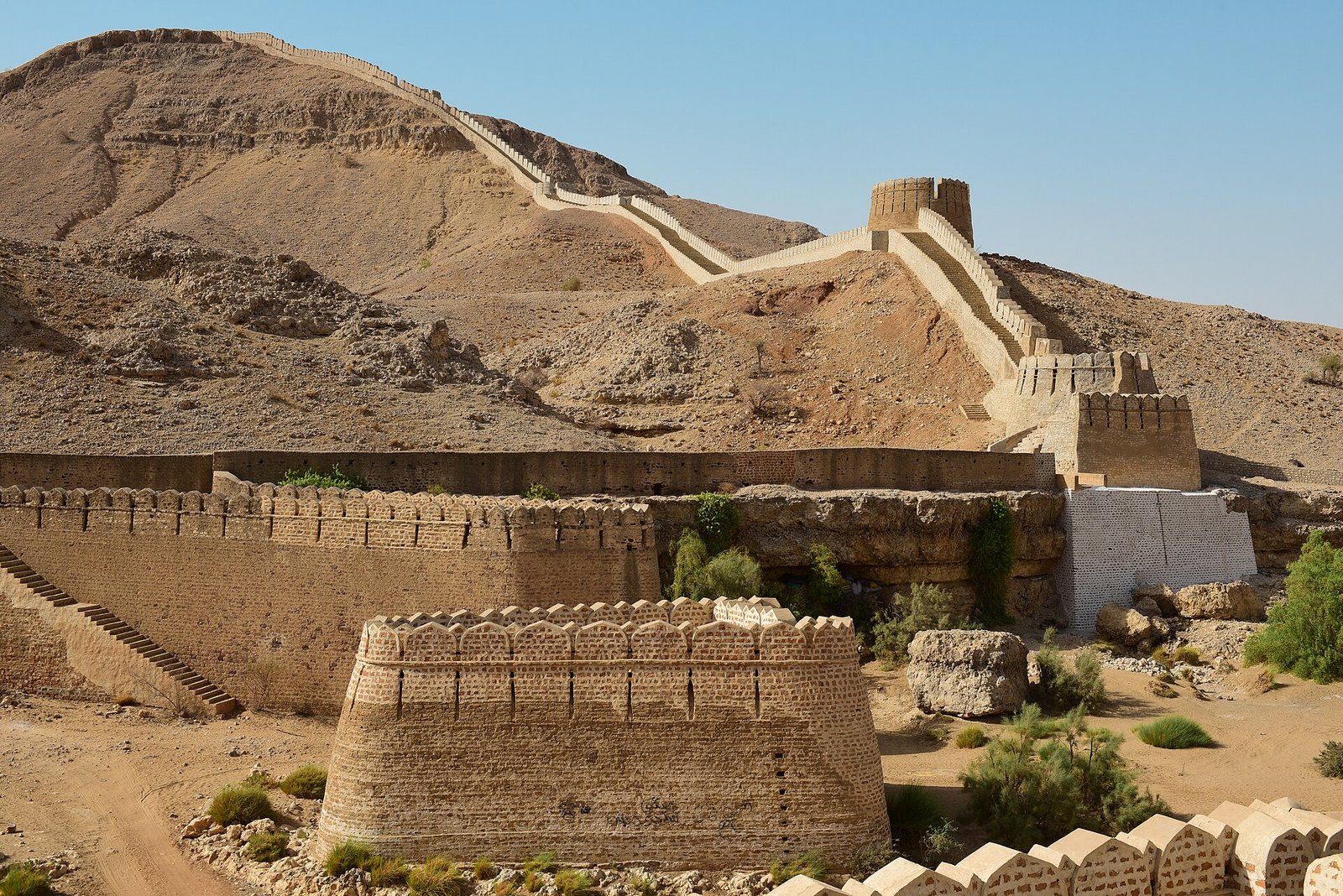
Ranikot Fort's walls running over the hills of Sindh
Destination guide

Ranikot Fort: The Complete Travel Guide

Ranikot Fort throws a wall some 31 km long across the barren Kirthar hills of Sindh. Nobody is quite sure who first built it, and that mystery is half the fun.

Updated October 2026By The Golden Adventure team
Photo: Adrian Leslie Lobo / Wikimedia Commons, CC BY-SA 3.0 (source)

Ranikot Fort at a Glance

Ranikot Fort, often called the Great Wall of Sindh, is one of the largest forts in the world, its walls running about 31 km over the hills of Kirthar National Park in Jamshoro District. It has been on UNESCO’s tentative World Heritage list since 1993 and makes a superb one- or two-day trip from Karachi or Hyderabad.

LocationNear Sann, Jamshoro District, Sindh, inside Kirthar National Park
AltitudeLow, rocky hills of the Kirthar Range
Best time to visitOctober to March
Getting thereAbout 4 hours from Karachi, 2 hours from Hyderabad, via the Indus Highway (N-55)
Top sightsSann Gate, Miri Kot, the ramparts, Shergarh, dark-sky stargazing
Known for“Great Wall of Sindh”, mysterious origins, Talpur history

Where Is Ranikot Fort?

The fort lies in the Kirthar hills west of the Indus, near the small town of Sann in Jamshoro District, about 90 km north of Hyderabad as the Indus Highway runs. From the highway a link road of roughly 21 km leads to the main entrance at Sann Gate.

The setting is stark and beautiful: bare ridges, dry stream beds and scrub, with the yellow sandstone walls following the skyline for kilometres in every direction. The whole complex sits inside Kirthar National Park.

History of Ranikot Fort

Its origins are genuinely unclear. Some accounts and inscription evidence point to a much earlier date, possibly the 4th–5th century, while archaeologists generally link the main construction to the 17th century. What is certain is that the Talpur Mirs, who ruled Sindh before the British, rebuilt large sections in 1812 at a reported cost of 1.2 million rupees.

Pakistan’s national commission for UNESCO nominated the fort in 1993, and it has remained on the tentative list ever since (Wikipedia). It is protected under the Antiquities Act of 1975. A restoration attempt in the 2000s was criticised for using cement and new stonework and was halted in 2006, so some walls look patched while others remain original.

MUST-SEE EXPERIENCES

Top 8 Things to Do in Ranikot Fort

Plan a full day to see the main gate, Miri Kot and a stretch of the ramparts; add a second day for Shergarh or stargazing.

  1. 01
    History

    Sann Gate

    The best-preserved of the four rhomboid gates and the usual entrance. Climb up for wide views of the walls running away over the hills.

  2. 02
    History

    Miri Kot

    A smaller fort inside the main enclosure, about 3 km from Sann Gate, said to have been the palace of the Mir royal family. It is reachable on foot.

  3. 03
    Viewpoint

    Walking the Ramparts

    Follow sections of wall between bastions for the classic “Great Wall” view. The scale only becomes clear once you are up on the ridgeline.

  4. 04
    Adventure

    Shergarh

    A fortress high in the Kirthar hills within the complex. Reaching it is a serious hike, so set aside a full day.

  5. 05
    Nature

    Stargazing

    Far from city lights, the fort is a favourite of the Karachi Astronomers Society, which runs night-sky trips here between October and March.

  6. 06
    History

    Amri, Shah Pir and Mohan Gates

    The other three gates are more remote. The Sann stream crosses two of them, and the western gate can be hard to reach when water flows.

  7. 07
    History

    Graveyards and Watchtowers

    Old graveyards, watchtowers and bastions are scattered through the enclosure, rewarding anyone with time to explore.

  8. 08
    Nature

    Kirthar National Park Landscapes

    The rugged hills around the fort lie within Kirthar National Park and look their best in the low winter light.

Best Time to Visit Ranikot Fort

October to March is the season. Days are pleasant for hiking and nights are cool and clear, ideal for camping and stargazing. The rest of the year the hills are dry and very hot, and the US State Department lists Sindh among the regions affected by extreme heatwaves.

Winter weekends are popular with groups from Karachi, so a weekday visit is quieter.

How to Get to Ranikot Fort

Take the M-9 motorway from Karachi to the Jamshoro area, then the Indus Highway (N-55) north to the Ranikot turn-off near Sann, and finally the link road to Sann Gate. A 2025 visitor report describes the link road as recently re-laid and smooth (Dawn).

FromRouteApprox. time
KarachiM-9 to Jamshoro, N-55 Indus Highway, link road (about 260 km)About 3.5–4 hours
HyderabadN-55 Indus Highway north, then link roadAbout 2 hours
Sann (Indus Highway)Link road to Sann Gate (about 21 km)About 45 minutes

There is no public transport to the gate; travel by private car with a driver.

Getting Around the Fort

Cars can reach Sann Gate and the village of Meeri inside the walls, but from there most exploring is on foot. Miri Kot is a walk from the gate, while Shergarh needs a full-day hike. Carry water and start back before sunset, as darkness falls quickly in the hills.

Where to Stay

There are no hotels at the fort. Most visitors do a long day trip from Karachi or stay in Hyderabad. Organised groups camp near the fort in the cool season; if you camp, bring a warm sleeping bag and extra blankets, as winter nights are cold.

Suggested Itineraries

Long day from Karachi

Leave Karachi by 6am, reach Sann Gate by mid-morning, walk to Miri Kot and along a stretch of wall, and head back by mid-afternoon to avoid driving in the dark.

Overnight with stargazing

Arrive in the afternoon, explore the gate and ramparts, camp under the stars and use the cool morning for a longer hike before returning.

Sindh heritage circuit

Combine Ranikot with Makli and Mohenjo-daro on our Sindh UNESCO Tour.

What to Pack

  • Hiking shoes with good grip for loose stone
  • Sun hat, sunglasses and sunscreen
  • At least three litres of water per person and snacks
  • Head torch (cover it with red film for stargazing)
  • Warm layers and a sleeping bag for overnight trips
  • Passport and visa copies for checkpoints

Combine Ranikot with Nearby Destinations

Ranikot sits neatly between Karachi and the north of Sindh. Pair it with the tombs of the Makli Necropolis on the way out of Karachi, or the desert villages of the Thar Desert to the south-east.

Heading north towards the ruins of Mohenjo-daro, note that you cross into the part of Sindh covered by UK travel restrictions. Explore more World Heritage options in our UNESCO sites guide.

Culture & Etiquette

The area around Sann is rural and conservative. Dress modestly, ask before photographing people and respect graves inside the enclosure. Take all rubbish away with you, and keep noise and lights down at night if others are stargazing.

Practical Travel Tips for Ranikot Fort

Safety and advisories: Ranikot lies south of Nawabshah, so it falls outside the zone where the UK FCDO advises against all but essential travel in Sindh (FCDO advice). The US State Department rates Pakistan overall at Level 3, “Reconsider travel”. Foreign visitors may be accompanied by local security, and checkpoints on the Indus Highway are routine.

Facilities: expect almost none at the site: no shops, little shade and unreliable mobile signal. Bring everything you need from Hyderabad or Karachi. No entry fee is mentioned in recent visitor reports; confirm with us before you travel.

Visas: you need a Pakistan visa (see our visa guide); every TGA tour includes a free Letter of Invitation.

Local tip: time your walk to Miri Kot for the last two hours of daylight. The walls turn gold, the heat eases, and you are back at camp just as the first stars appear.

RANIKOT FORT TRAVEL

Ranikot Fort Highlights at a Glance

A 31 km circuit of walls, four gates and forts within a fort, spread over the bare Kirthar hills and still wrapped in historical mystery.

Go between October and March, start early from Karachi or Hyderabad, and consider staying overnight for some of the darkest skies in southern Pakistan.

For a first-hand account of a winter stargazing night at the fort, read this Dawn feature from 2025.

Plan your Ranikot Fort trip

Ranikot Fort Tours with The Golden Adventure

Ranikot is part of our Sindh UNESCO Tour, alongside Makli and Mohenjo-daro. If you are already in Karachi, ask us about a private day trip or an overnight camping visit.

Plan your Ranikot Fort trip

Tell us your dates and interests and our team in Gilgit will design a private trip and send your free Letter of Invitation.

Ranikot Fort FAQs

How big is Ranikot?

Its walls run for about 31 km, which is why it is often called the Great Wall of Sindh and counted among the largest forts in the world.

Who built Ranikot Fort?

No one knows for certain. Theories range from the 4th–5th century to the 17th century, and the Talpur Mirs rebuilt much of it in 1812.

How far is it from Karachi?

About 260 km, or roughly 3.5–4 hours by road via the M-9 and the Indus Highway.

Is it safe to visit?

It is outside the UK FCDO’s advise-against zone in Sindh, though the US rates Pakistan at Level 3 (Reconsider travel). Visit in daylight, carry your passport and expect checkpoints.

Can you camp there?

Yes, groups camp near the fort in the cool season, especially for stargazing. Bring your own warm bedding.

Is Ranikot a UNESCO World Heritage Site?

Not yet. It has been on UNESCO’s tentative list since 1993.

TGA AI AssistantOnline · usually replies in seconds
AI can make mistakes. Please don't share personal, passport or card details.